My Perfect 7 Day Albania Itinerary: Tirana to the Southern Coast
Written by Rita Serra | Published Aug 04, 2026
Heads up! This post contains affiliate links, which means I may earn a small commission if you purchase at no extra cost to you. I only recommend what I truly believe in, and your support helps keep this site running and free to access.
Planning your first trip to Albania? This 7 day Albania itinerary runs from the capital down to the southern coast, through two UNESCO cities and out to the Ionian beaches, with day-by-day plans, transport, where to stay, and real budgets. Written by someone who has lived here for six years.
Most people arrive in Albania knowing one thing about it, usually the beaches, and leave stunned by everything else. The mountains. The two-thousand-year-old ruins.
The stone cities that look carved out of the hillside. The fact that a full meal with wine can cost less than a coffee back home.
I moved to Saranda six years ago, sight unseen, and I’ve spent every year since exploring the country I accidentally made home.
This is the route I’d give a friend flying in for the first time with a week to spend: Tirana, Berat, Gjirokastër, and the southern coast, top to bottom.
Seven days is enough to see the spine of the country properly without rushing. You’ll start in the capital, drop through two of the most beautiful old cities in the Balkans, and finish with your feet in the Ionian.
And if you have more time, I’ll show you exactly how to stretch it.
What to know before you go
Albania rewards a little preparation. It’s easy to travel, but it doesn’t run quite like Western Europe, and a few things will shape your trip before you even land: when you come, how you pay, and how you get around. Here’s what I’d want a first-timer to know going in.
Weather in Albania
Albania has real seasons, and this route runs from the inland cities to the coast, so you’ll feel some variety.
☀️ June to September is hot and dry. Coastal Saranda and Ksamil hit the low-to-mid 30s°C, and inland Berat and Gjirokastër can feel even hotter in a stone city with no sea breeze. Peak beach season, peak crowds, peak prices.
🍂 September and October are the best time to do this trip, in my honest opinion. The sea is still warm, the inland cities are comfortable to walk, the summer crush is gone, and everything costs less.
🌸 April to June is green and gorgeous: wildflowers inland, quiet beaches, much cooler but can be swimmable water by June if you like colder water.
❄️ November to March is mild on the coast but genuinely cold and often wet inland, and the mountains get snow. The cities are still beautiful, but pack properly and know that some coastal spots wind down for winter.
A few things nobody tells first-timers
Albania runs on cash. Cards work in Tirana and bigger hotels, but for buses, small restaurants, markets, and much of the south, you need lek. Withdraw carefully, because the wrong ATM will eat you alive on fees.
I wrote a full guide to avoiding ATM fees in Albania. Read it before you touch a machine.
The roads are better than the reputation. People still picture terrifying mountain roads. The main highways south have been rebuilt and modernised, and the drive is genuinely pleasant now. More on that below. One thing to keep in mind: while the roads are better, the drivers are a whole other thing to be mindful of.
English is widely spoken by younger Albanians, especially in tourism, but a few words of Albanian go a long way, and Italian and Greek are common too.
Albania is not in the EU or Schengen. Most Western travellers get generous visa-free entry (US citizens especially), but confirm your own rules before you fly.
How to get to Albania
Tirana International Airport (TIA)
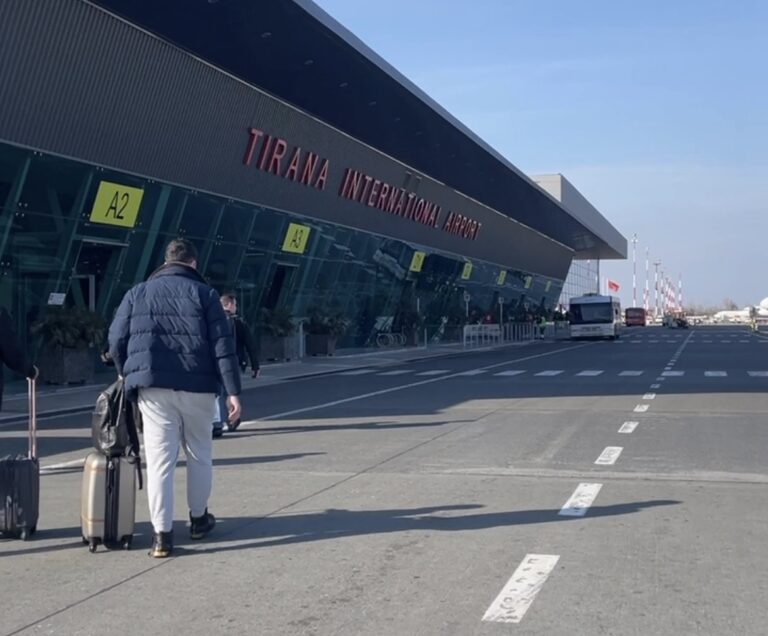
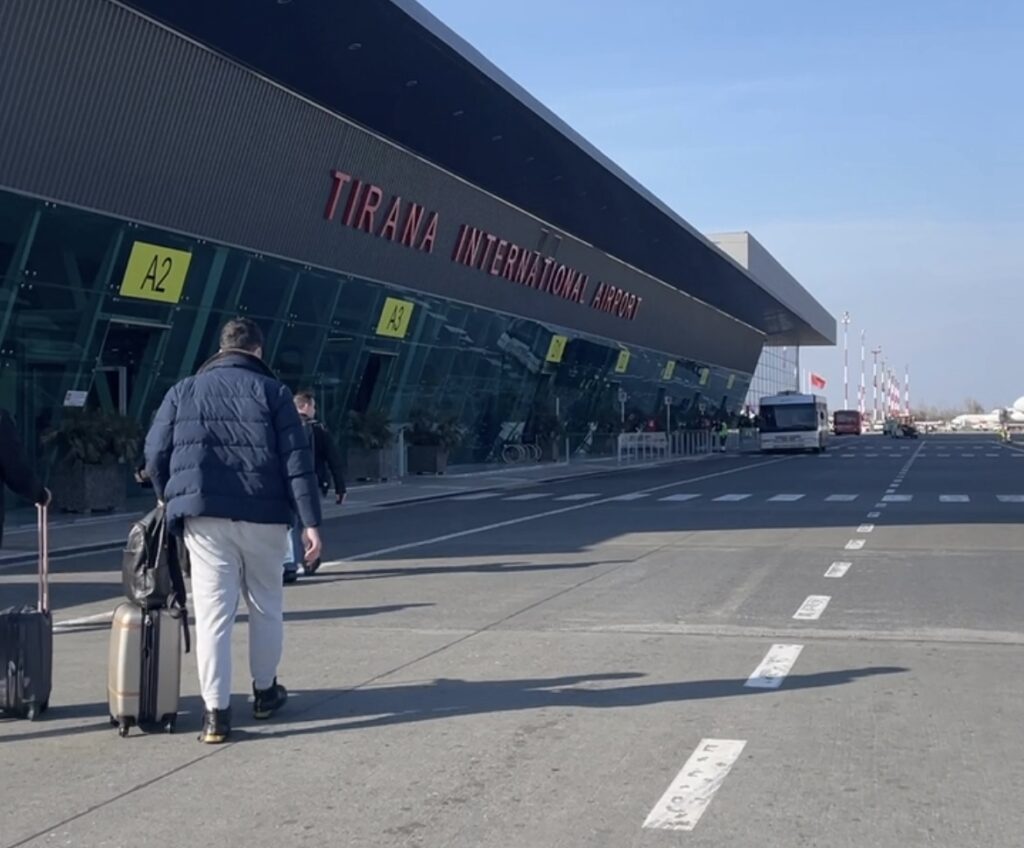
Flying into Tirana International Airport (TIA) is the country’s main gateway and the right choice for this itinerary. It has grown fast, with direct routes across Europe and the UK on both full-service and budget airlines, so it’s usually the cheapest and most flexible way in. From Tirana you’re perfectly placed to start north and work south, exactly the way this route runs.
What about the new Vlora airport?
You may have seen headlines about Vlora International Airport opening as a gateway to the southern coast. As of summer 2026, Vlora Airport remains closed to commercial flights due to pending international operational certifications and internal shareholder legal disputes. For most travellers, Tirana remains the practical choice for now, with far more flights and lower fares.
The Corfu ferry (an alternative for the far south)
If your trip is focused on staying on the coast, you can also fly into Corfu (CFU) and take the 30-minute fast ferry to Saranda, then run this itinerary in reverse, south to north. It’s the fastest way to reach the southern coast specifically.
How to get around Albania
You’ve got two real options for this route, and the right one depends on your budget and how much you value freedom.
Option 1: Rent a car
For this itinerary, a rental car is the option I’d lean toward if the budget allows and you’re comfortable driving in a foreign country. The main highway roads are good. The cities are where it gets interesting. In Saranda, there are no traffic lights, so you stop at most intersections and edge out before continuing, and in summer, parking is close to impossible. Keep both in mind.
The payoff is the freedom. The drives between the coastal towns are scenic, and having your own wheels means you can stop at viewpoints, reach the Blue Eye without a tour, set your own pace in Ksamil, and even detour to Borsh or Himarë.
Book ahead for the best rates, and know that Albanian driving is a bit more assertive than you may be used to. It’s manageable. Just stay alert. Check out Discover Cars for rental pricing.
Option 2: Buses and furgons
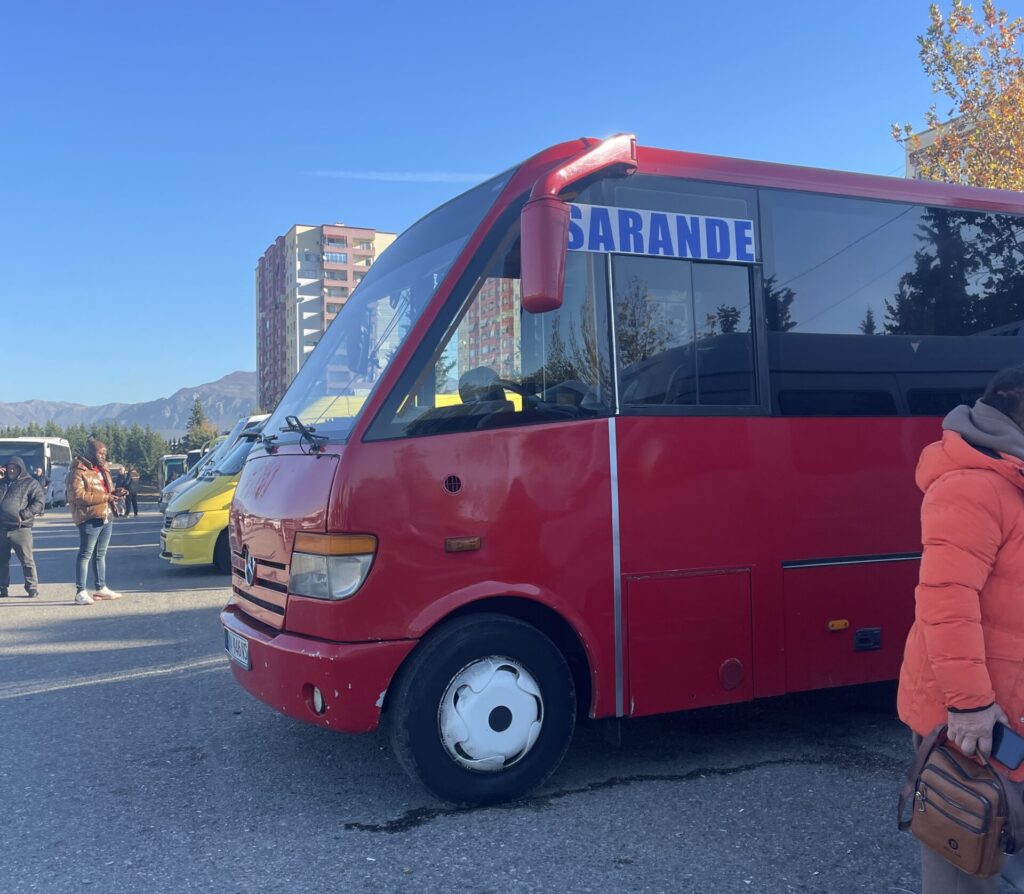
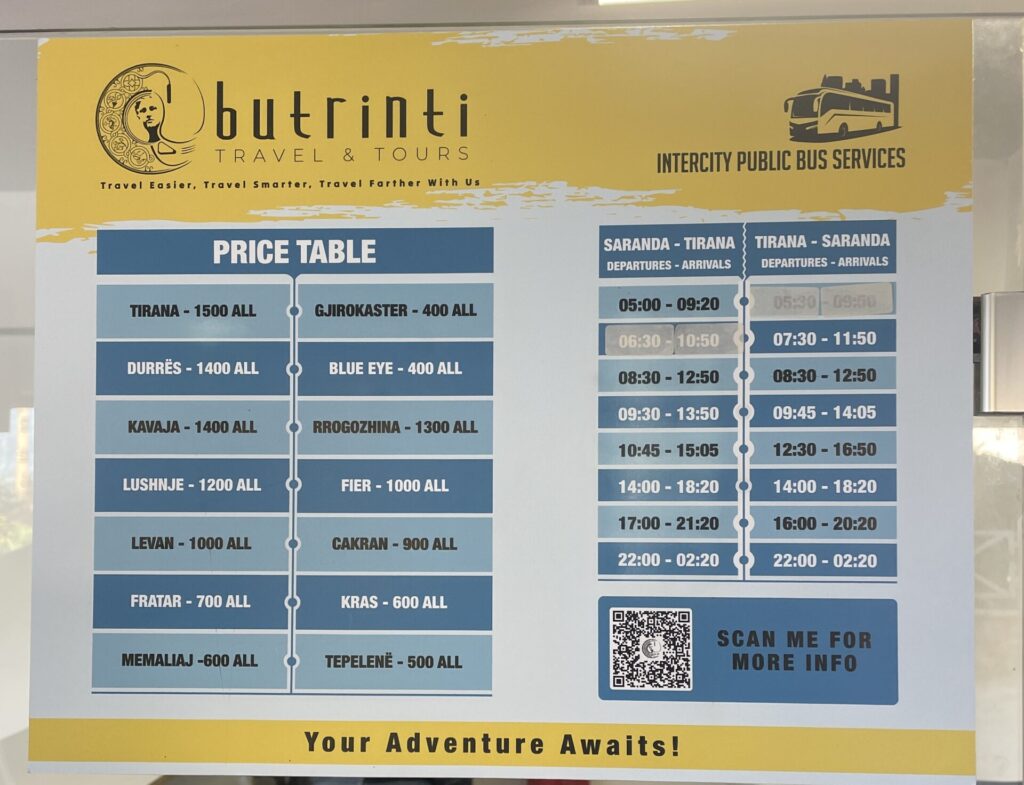
Albania’s intercity buses and furgons (shared minibuses) connect all the stops on this route cheaply. They’re how locals travel, and they’re perfectly doable for visitors; they just run on their own schedules and take longer.
Rough drive times between stops:
- Tirana to Berat: about 2 to 2.5 hours
- Berat to Gjirokastër: about 3 to 4 hours (the longest leg)
- Gjirokastër to Saranda: about 1 to 1.5 hours
- Saranda to Butrint: about 30 minutes
- Saranda to Ksamil: about 15 to 20 minutes
You can book through Gjirafa Travel if you decide to take the Furgon. If you’d rather skip the middle and go straight from the capital to the coast, that direct journey is its own thing. Here’s my full guide to getting from Tirana to Saranda.
The full 7 day Albania itinerary (Who it’s for?)
This is for the first-time visitor who wants the whole country, not just the beach. It suits history lovers, solo travellers (Albania is one of the easiest and safest countries I know for solo women, and I’d know), slow travellers who want time in each place, and anyone over 40 who’s ready for somewhere that still feels like a discovery. If you like good food, dramatic landscapes, and paying a fair price, you’re going to love this.
Day 1: Arrive in Tirana
Get your bearings in the capital
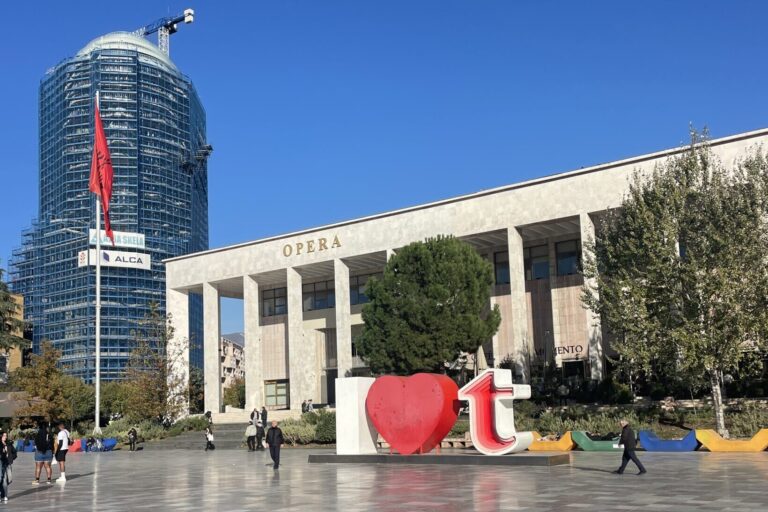
Fly in, settle in, and let Tirana surprise you. It’s a young, colourful, fast-changing city, with painted buildings, buzzing cafes, and communist history reinvented.
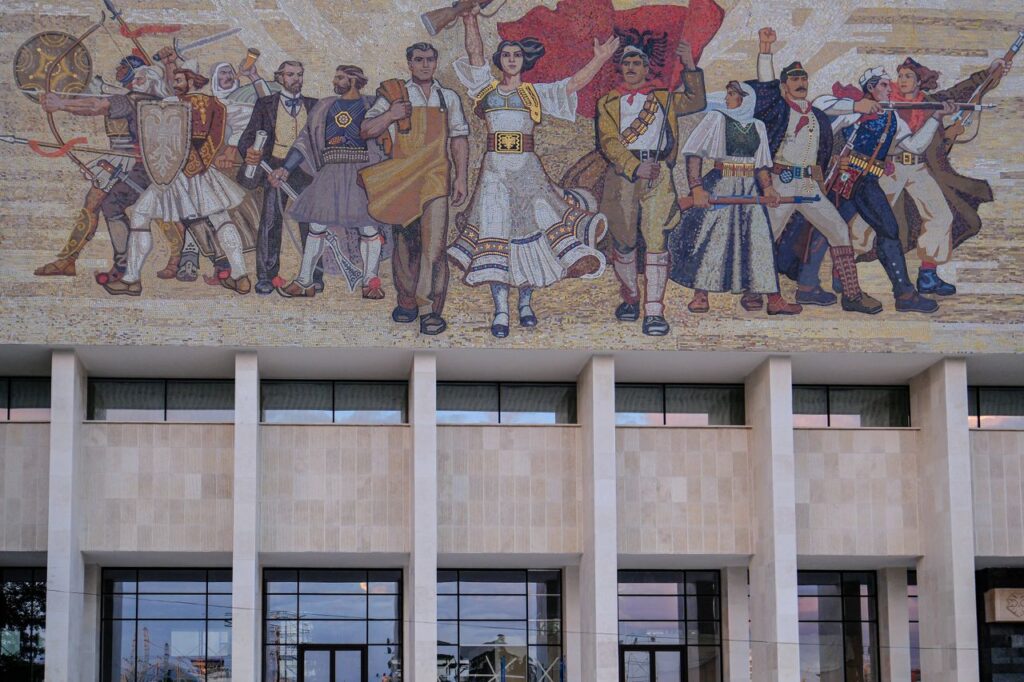
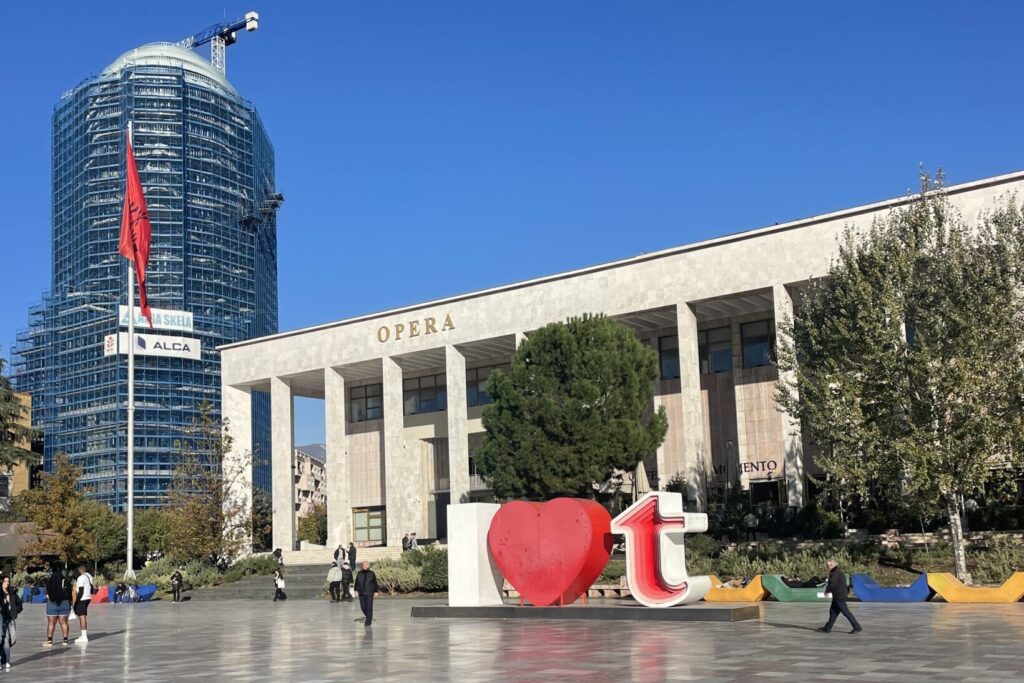
Start at Skanderbeg Square, the huge central plaza, then wander into Blloku, once the closed-off quarter for communist elites and now the beating heart of the city’s cafe and nightlife scene. Have your first Albanian coffee (they take it seriously) and a relaxed dinner.
Tirana surprised me. I wasn’t expecting to like it as much as I did. Capital cities can feel interchangeable, but Tirana holds its own, mostly on the strength of how strange and layered its history is.
It doesn’t look like much at first, and then you realize how much there is to do. The restaurants alone are worth the stop. There are historical landmarks in the centre, Cold War bunkers on the edge of town, castles a short drive away, and a cable car that lifts you over the city for a view that reframes the whole place.
For a city most people skip on the way to the coast, Tirana earns a stay. If you are able to spend your first 3 days in Tirana, this is my full list of things to do.
Where to stay in Tirana
Blloku:
- Vibe: Buzzy and social. Cafes, bars, and restaurants on every corner, and it stays lively well into the night.
- Best for: Travelers who want to be in the thick of it and walk to dinner and drinks. Skip it if you’re a light sleeper.
- Average cost (per night): 3-star $35 to $55 · 4-star $65 to $95 · 5-star $160+
The Centre (around Skanderbeg Square)
- Vibe: Central but calmer. You’re walking distance to the main landmarks, with less late-night noise than Blloku.
- Best for: First-timers who want the sights on foot and an easier night’s sleep. Also the practical pick for this 7 day Albania itinerary, since it’s a quick taxi to the Kashar terminal for your onward bus.
- Average cost (per night): 3-star $30 to $55 · 4-star $95 to $110 · 5-star $180+
Pazari i Ri (the New Bazaar):
- Vibe: Food and character. Market energy by day, restored old-town streets, and some of the best eating in the city.
- Best for: Travelers who care more about food and atmosphere than nightlife.
- Average cost (per night): 3-star $40 to $50 · 4-star $60 to $85 · 5-star $130+
Day 2: Full day in Tirana
Morning: history and the cable car
Give the capital a proper full day. Options that are all worth it:
- Bunk’Art 1 or 2, vast Cold War bunkers turned into powerful museums about Albania’s communist decades. Bunk’Art 1 is bigger, and on the edge of town; Bunk’Art 2 is central and smaller. Pick one if you’re short on time; both if you’re a history person.
- The Dajti Ekspres cable car up Mount Dajti for the view back over the whole city and the plains beyond.
- The National History Museum on Skanderbeg Square for the full sweep of the country’s past.
- The Pyramid of Tirana, the bizarre former communist monument recently reborn as a tech and culture space you can climb.
- Et’hem Bey Mosque, a small, beautifully frescoed jewel right on the square.
- House of Leaves, the former secret-police HQ turned museum of communist-era surveillance. Small, central, and quietly chilling.
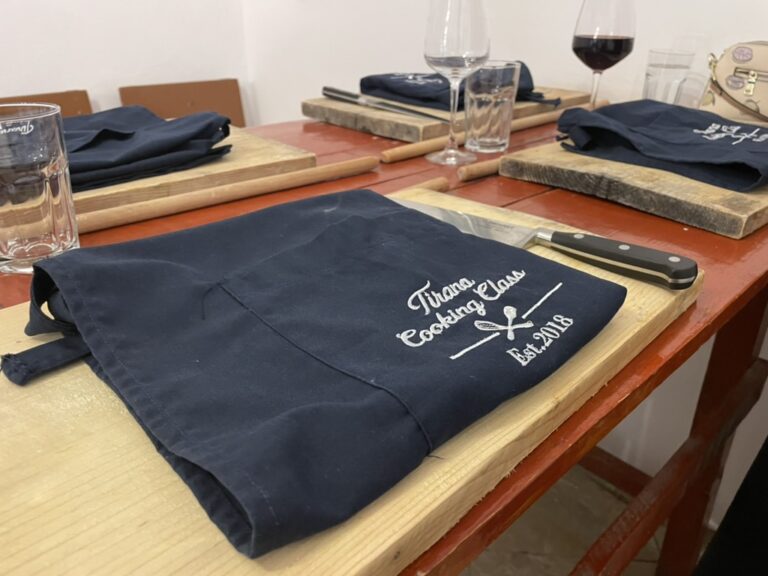
- Taking a cooking class: I loved my experience with Tirana Cooking Class and learning new recipes. I highly recommend this experience if you come to Tirana.
Optional: half-day to Krujë or Bovilla Lake
If you’d rather get out of the city, both are a short trip away. Krujë is a hilltop town with a castle tied to Albania’s national hero Skanderbeg and a lovely old Ottoman bazaar for shopping.
Bovilla Lake is in the other direction, a scenic reservoir tucked in the mountains with a short hike up to a viewpoint over the water.
Day 3: Tirana to Berat
The city of a thousand windows
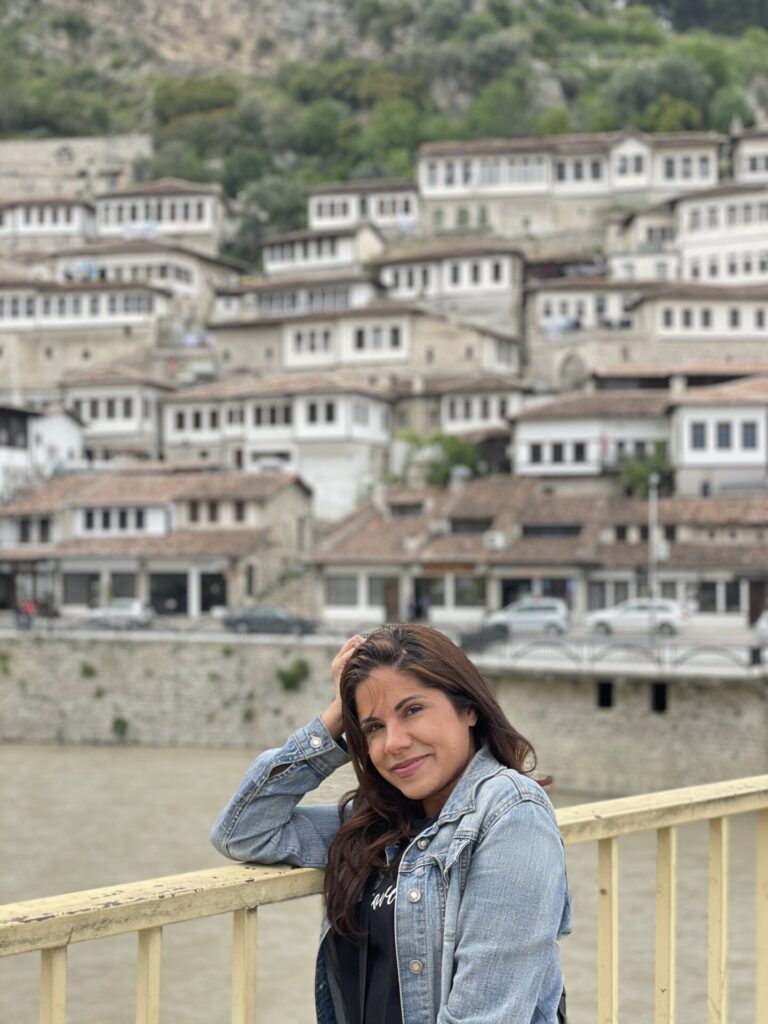
Travel to Berat in the morning and give yourself the afternoon and evening there. Berat is a UNESCO World Heritage site and one of the most photogenic places in the country, a hillside of white Ottoman houses stacked so their rows of windows seem to climb over each other. Hence the nickname.
Cross the old bridge between the Mangalem and Gorica quarters, then climb up to Berat Castle, which is unusual because people still live inside the fortress walls. Up top, you’ll find old churches, the Onufri Museum of icon painting, and a view that makes the climb worth it.
Things to do in Berat
- Walk the Mangalem quarter and photograph the famous windows
- Climb to the inhabited castle and its churches
- See the Onufri icon museum inside the castle
- Cross to the Gorica side for the best view back at Mangalem
- Taste local wine; Berat is one of Albania’s best wine regions.
- Sunset from the castle or the riverside
If you do one thing in Berat, book a table at Lili’s Homemade Food. It’s a family running a few tables out of their home in the old town, and it’s one of the best meals you’ll have in Albania: warm hosts, incredible cooking, an atmosphere no restaurant can fake. Call ahead, because they fill up fast, and for good reason.
Where to stay in Berat
Honest answer first: don’t overthink this one. Berat is small, and the old town is the whole reason you came, so a traditional guesthouse in Mangalem or Gorica puts you inside the postcard and within walking distance of everything. Book one of those and you can’t really go wrong.
If you want the details, here’s how the two old-town quarters differ:
Mangalem (the “windows” side)
- Vibe: The famous face of Berat, white Ottoman houses stacked up the hillside. The most atmospheric place to sleep, with some steep cobbled lanes to factor in.
- Best for: First-timers who want to be in the heart of the old town.
Gorica (across the river)
- Vibe: The quieter side, and the one with the postcard view back at Mangalem. A footbridge connects the two, so you’re still minutes from everything.
- Best for: Anyone who wants the old-town charm with a bit more calm.
Average cost (per night): Guesthouses and budget stays from $20 to $34, mid-range hotels around $56 to $88 (USD).
One thing I’ve heard great things about is staying up inside the castle. People still live within Berat’s fortress walls, and there are guesthouses up there, so you’d wake up inside a working medieval citadel with the valley spread out below. I haven’t done it yet, but it’s high on my list, and everyone who has raves about it.
What I actually did
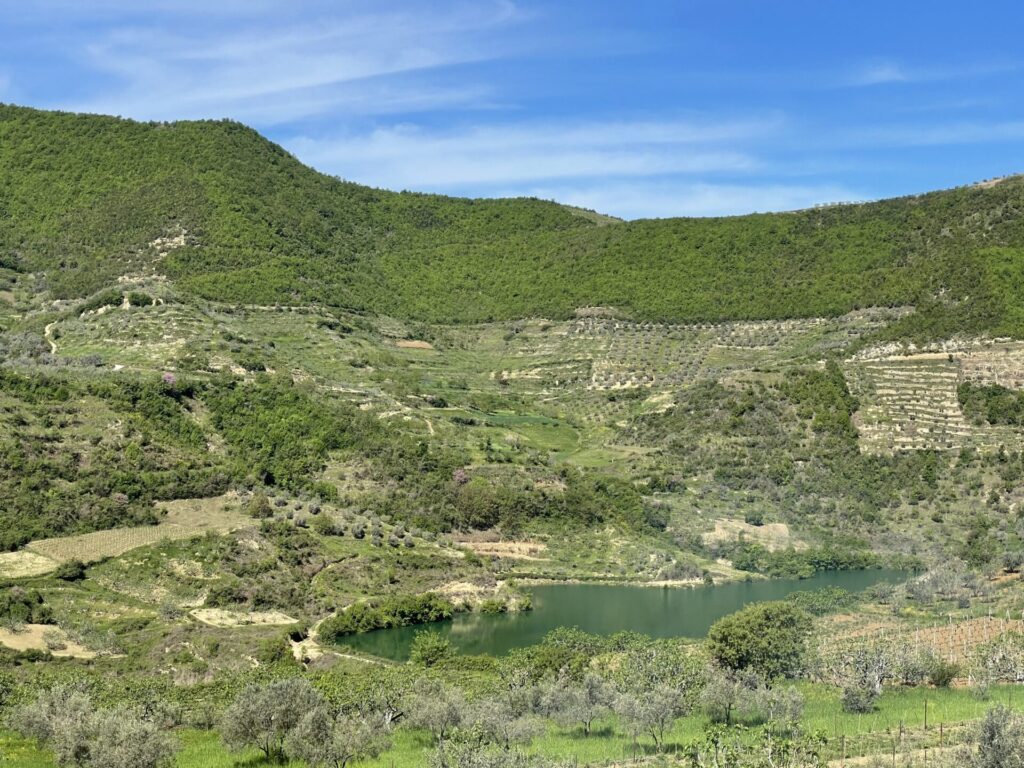
I skipped the centre and stayed about 15 minutes out of town at Alpeta Winery, driving into Berat each day. It was my favorite part of the whole trip.
I had a long four-day weekend there, and I still think about it: the wine, the food, and the views that stopped me every morning.
There’s a small village within walking distance too, with a few more places to eat. If you’ve got a car and the sound of vineyards appeals more than cobblestones, stay here instead of in town. You won’t regret it.
Day 4: Berat to Gjirokastër
The stone city
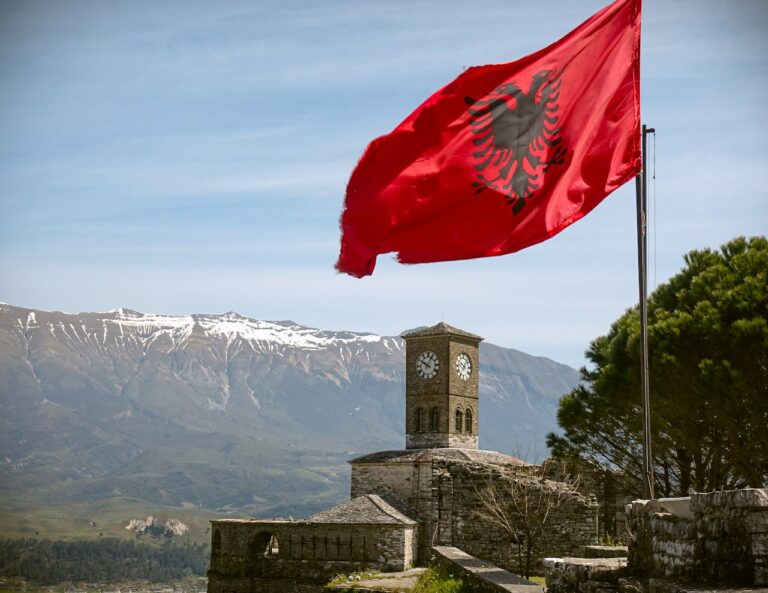
This is the longest travel day, so start reasonably early. Gjirokastër is the second UNESCO city on this route and a complete contrast to Berat: where Berat is white and bright, Gjirokastër is grey stone, steep and dramatic, its slate-roofed Ottoman mansions climbing the mountainside beneath a huge castle.
Explore the old bazaar, then head up to Gjirokastër Castle, one of the largest in the Balkans, with a Cold War military museum, a captured spy plane, and sweeping valley views. Tour a traditional Ottoman house like the Zekate or Skenduli house to see how the merchant families lived.
Things to do in Gjirokastër
- Wander the stone bazaar
- Explore the huge hilltop castle and its museum
- See the captured US spy plane and Cold War tunnel
- Tour the Zekate or Skenduli Ottoman house
- Try qifqi, the local rice-and-egg specialty
- Watch the light change on the stone city at dusk
Where to stay in Gjirokastër
Honest answer: stay in or just below the old town, near the bazaar. There are plenty of good guesthouses, but in Gjirokastër location matters more than it does in Berat, and here’s why.
The town is small and spread out at the same time, which is hard to explain until you’re there. It climbs a steep hillside, so a walk that looks like 15 minutes on a map can feel a lot longer once you factor in the hills and the cobblestones. Where you sleep really shapes how much climbing you do each day, so pick your spot with that in mind.
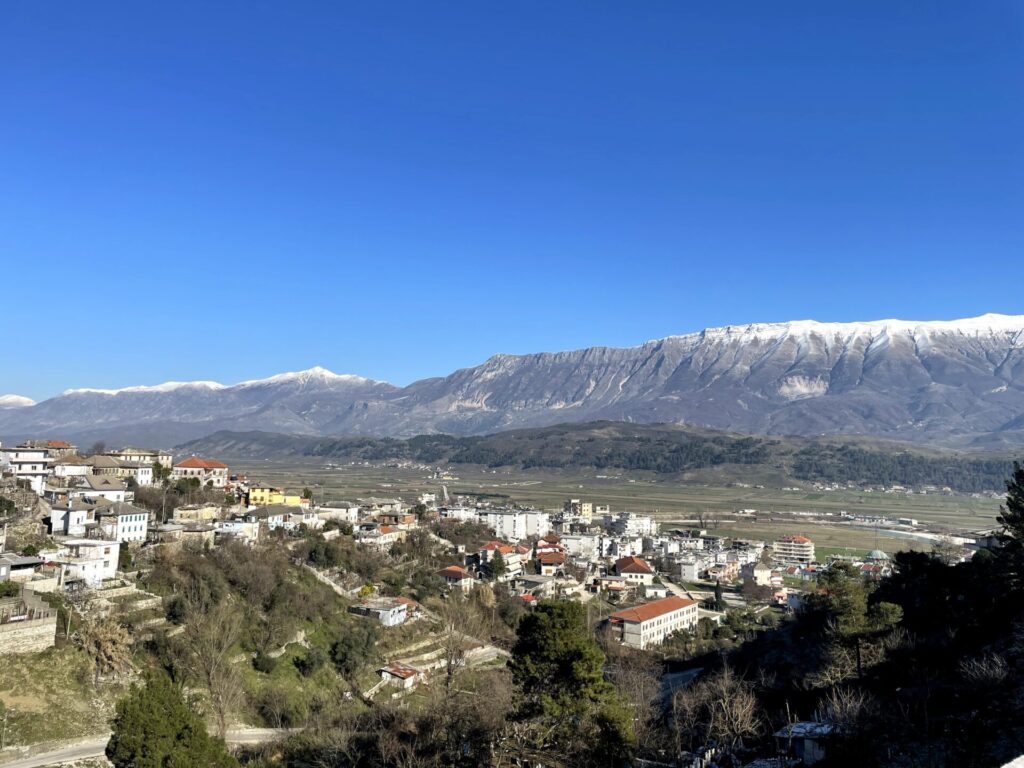
What I actually did: I stayed at Mele Guesthouse, about a 10 to 15 minute walk from the centre where all the restaurants are, and close to the castle. It was my favorite area to be based in; it was so quiet, and the insane view from my bed was exactly what I needed in the morning.
For breakfast, all I had to do was literally sit on my balcony, and they would bring breakfast straight to me. Such great memories from that place.
Day 5: Gjirokastër to Saranda
Gateway to the Riviera
A short, pretty drive brings you down out of the mountains to the sea and Saranda, your base for the rest of the trip.
Drop your bags and get oriented on the promenade, the long curved waterfront that’s the centre of everything. Coffee by the water, a swim off the front, and your first proper look at the Ionian.
This is my hometown, so consider the next three days the local’s version. From this one town you can reach Butrint and the Blue Eye, the beaches at Ksamil, sunset at Lëkurësi Castle, and boat trips or paddleboarding straight off the waterfront.
I pulled together everything worth doing around here in my guide to Albania: Your Next Dream Travel Destination if you want the bigger picture before you settle in.
Sunset at Lëkurësi Castle
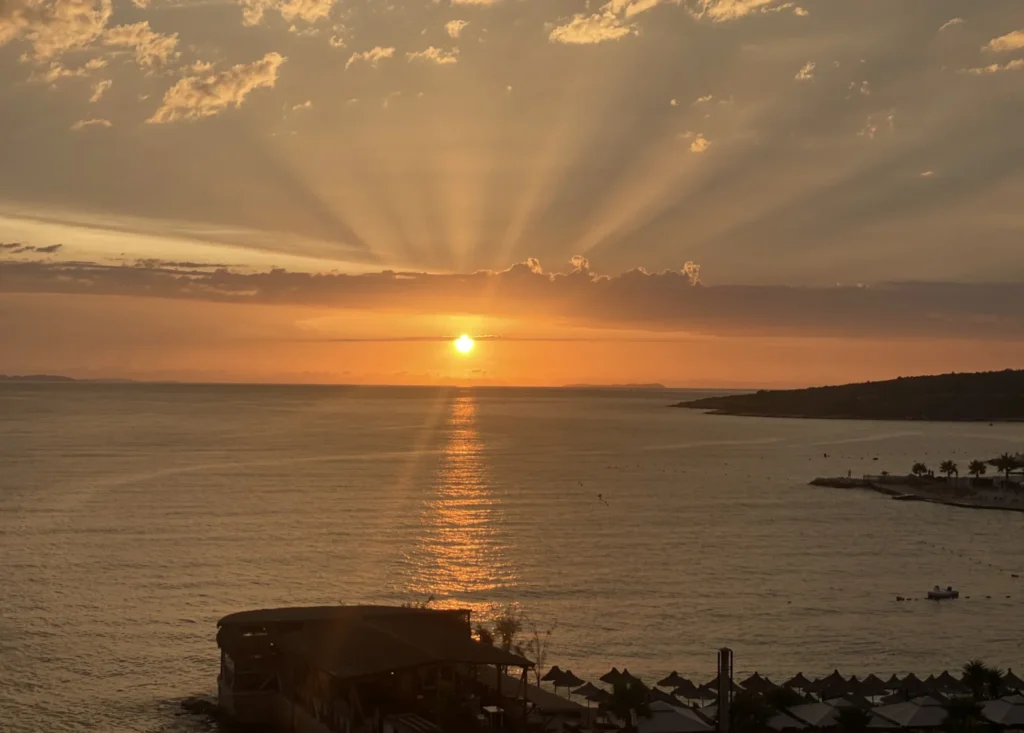
End the day up at Lëkurësi Castle on the hill above town, an Ottoman fortress that’s now a restaurant with the best sunset view in the area, out over the bay with Corfu across the water. Book a table for golden hour.
If you’re too tired for the climb up to the castle, head to Kodra instead and grab a spot right on the water at Sunset Beach. Either way, you won’t regret it.
Where to stay in Saranda
Where to stay is the one Saranda question I won’t cram into a paragraph, because I live here and the right area depends entirely on the trip you want.
Saranda is built like an amphitheater facing the sea, so the higher you stay, the better the view and the steeper the walk home, and a hotel labeled “city center” can still leave you climbing a hill you didn’t know was there.
I broke the whole thing down in a separate local’s guide: Kodra (my favorite, quieter beaches and the best sunsets), the City Center (walkable and easiest for first-timers), Rruga Butrinti (the resort and family stretch), and Ksamil (base here if you came for the beaches).
Each one comes with my honest picks, including which hotels I’ve stayed in myself and which come from people I trust. For the full breakdown, here’s my complete guide on where to stay in Saranda.
Day 6: Butrint and the Blue Eye
Morning: Butrint
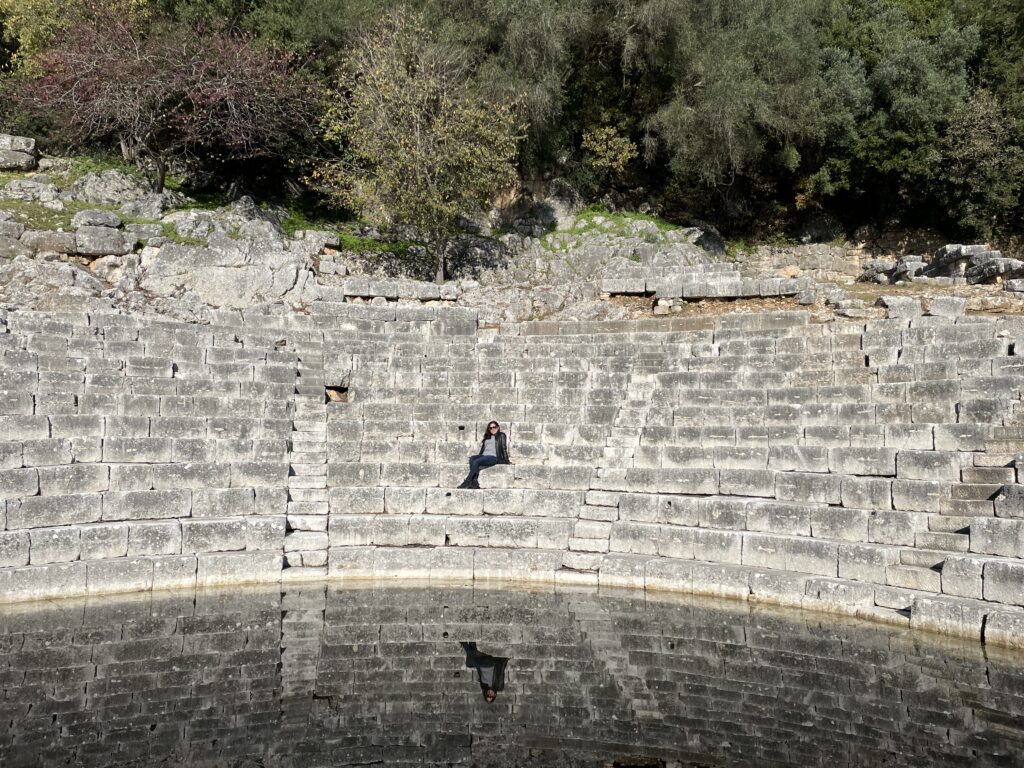
Start your day at Butrint, the one site you shouldn’t skip. It’s a UNESCO World Heritage site on a quiet, wooded peninsula, where Greek, Roman, Venetian, and Ottoman ruins sit layered on top of each other in a single national park.
You’ll walk through a Roman theatre, a mosaic baptistery, and old city walls, all of it wrapped in birdsong and water. Go early, before the heat builds and the tour buses arrive from Saranda. Give yourself about two hours to walk the full loop.
Afternoon: the Blue Eye
In the afternoon, head inland to the Blue Eye (Syri i Kaltër), a natural spring so deep and clear the water glows an unreal blue at its centre. It pairs easily with Butrint by car or on a combined tour, since both sit south of Saranda. You can’t swim in the spring itself, but the short walk through the forest to reach it is worth the trip.
Things to do
- Walk the full Butrint archaeological loop
- Climb the Venetian tower for the wetland view
- See the Blue Eye spring
- Do both as a self-driven day or a half-day tour
Day 7: Ksamil, then onward
The postcard beach
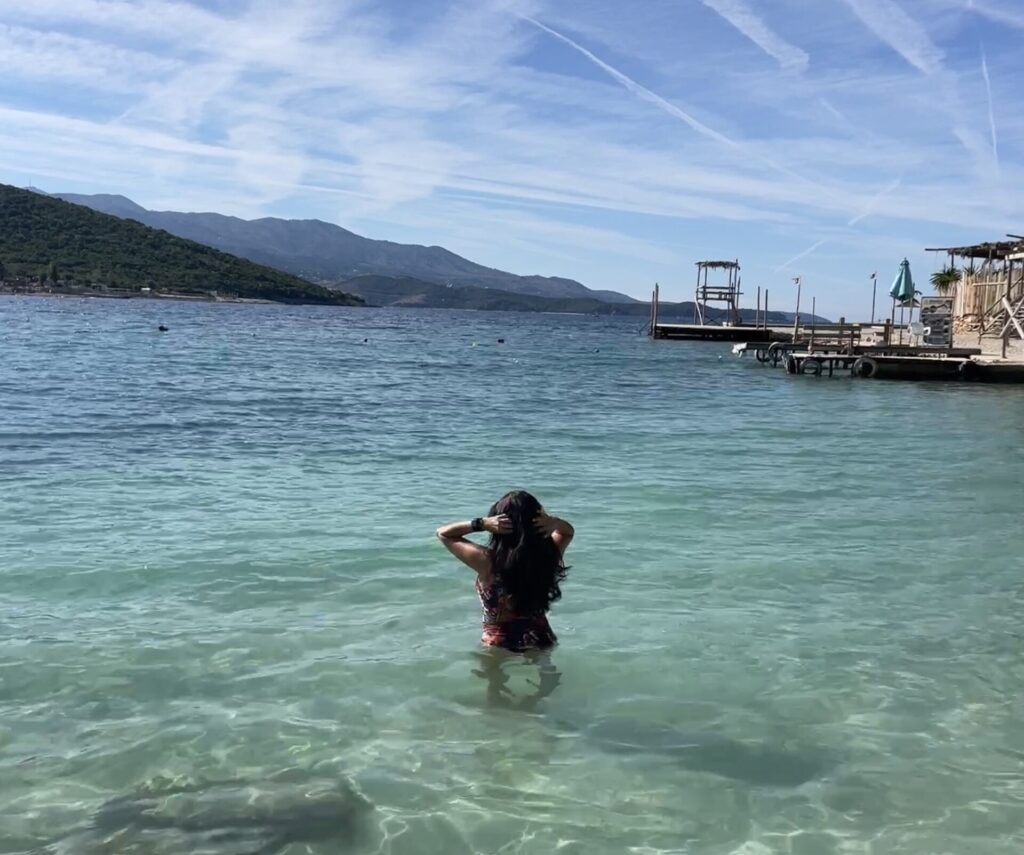
Finish with Ksamil, the reason southern Albania went viral: white sand, Caribbean-blue water, and a cluster of tiny islands just offshore you can swim or paddle out to. It’s minutes south of Saranda.
Honest note: Ksamil is popular now, and in peak summer the main beaches get crowded fast. If you’re coming in high season, go early in the morning before the people coming in for the day- meaning the day crowds, the tour crowds, the beach crowds, or the tour buses that arrive from Saranda. Or better yet, visit in the shoulder season when it’s much quieter.
Getting home (or going further)
From Saranda you have a few ways out. Catch the ferry to Corfu for a flight home, or head back to Tirana by furgon (about 4-5 hours) or rental car. If you’re driving, break up the trip with a few stops you skipped on the way down.
What if you have more than 7 days?
This is where it gets good. Seven days covers the spine of the country, but Albania rewards anyone who lingers, and there are three natural ways to stretch this trip depending on what you’re after.
If you want more coast, add the Albanian Riviera on your way back north. Instead of returning to Tirana the fast way, follow the coastal road through Himarë and Dhërmi, two of the prettiest beach towns in the country, then climb the dramatic Llogara Pass or cut through the new tunnel toward Vlorë. This is the most scenic stretch of coastline in Albania, and it’s the piece most first-timers wish they’d left time for.
If you’d rather add a second country, hop the ferry from Saranda to Corfu. It’s a 30-minute crossing to Greece, which makes a two-country trip surprisingly easy to pull off, and Corfu pairs naturally with the southern half of this route.
And if you want a completely different side of Albania, go north. Base yourself in Shkodër, then head up into the Albanian Alps at Theth and Valbona, where the beaches give way to glacial valleys, mountain guesthouses, and one of the best day hikes in the Balkans. It’s a whole other country up there, honestly, and it deserves its own trip more than a tacked-on few days, so I’d only add it if you have a solid week to spare.
Is Albania worth a week? Here’s my honest answer
Absolutely. A 7 day Albania itinerary gives you just enough time to see the Albania most visitors don’t realize exists: two UNESCO cities, a Cold War capital reinventing itself, and a coast that still feels like a secret.
You’ll walk through castles people still live in, eat a full dinner for less than the price of a coffee back home, and watch the sun drop into the Ionian from a fortress wall. Seven days gives you a taste of Albania from top to bottom and, more importantly, a reason to come back for more.
Here’s the honest part, and the reason I wrote this guide. Albania is easier than you think. The roads are good, the buses run, the prices are fair, and as a woman who travels it alone, I’ve felt safer here than almost anywhere I’ve been. You don’t need to be brave to come. You need a week and a rough plan, and now you have both.
If you have questions about any leg of this route, leave me a comment. I live here, and I answer every one.
Is 7 days enough for Albania?
Seven days is enough to see the spine of the country properly, Tirana, two UNESCO cities, and the southern coast, without rushing. It’s not enough to see everything (the north alone deserves a week), but it’s the ideal first trip. Add days if you want the Riviera or the mountains.
Is Albania safe, especially for solo female travellers?
Yes. Albania is one of the safest and friendliest countries I’ve travelled to, and I’ve lived here alone as a woman for six years. Petty crime is low, locals are genuinely welcoming, and both the cities and the coast are easy to navigate solo. Use normal common sense, and you’ll be more than fine. Want to know more about living in Albania as a solo female? Here’s my honest take on what it’s like to live here for 6 years.
Should I rent a car or use buses?
If your budget allows and you’re comfortable driving, a car gives you the freedom this route rewards. If you’re on a budget or don’t want to drive, buses and furgons connect every stop cheaply; they just take longer. Both work.
Do I need a visa for Albania?
Albania is not in the EU or Schengen, but most Western travellers get generous visa-free entry, and US citizens in particular get exceptionally generous access. Always confirm the current rules for your own passport before booking.
What if I have fewer than 7 days in Albania?
Cut the middle. Do Tirana (1 to 2 days) and then go straight to the coast for Saranda, Butrint, and Ksamil. You’ll miss Berat and Gjirokastër, but you’ll still get the capital and the best of the south.