Cost of Living in Albania: What Six Years in Saranda Actually Taught Me
(And Why I’m Leaving)
Written by Rita Serra | Published Sept 03, 2026
Heads up! This post contains affiliate links, which means I may earn a small commission if you purchase at no extra cost to you. I only recommend what I truly believe in, and your support helps keep this site running and free to access.
- Is Albania still cheap? The honest answer
- What I paid then vs now
- Why costs have risen in Saranda
- What not to do when you're searching for an apartment
- A realistic monthly budget today
- Saranda vs the rest of Albania
- Why I'm leaving
- Is it still worth moving to Albania?
- One thing worth watching: the EU question
- Cost of living in Albania: FAQ's
When I moved to Saranda six years ago, the cost of living in Albania was one of the biggest reasons it felt possible. Six years later, I’m the one packing up, and the rising cost is part of why.
That gives me a strange vantage point: not a week-long visitor’s guess, but someone who’s paid the rent, bought the groceries, and watched the prices climb the whole way.
Most posts on this give you today’s prices and call it done. I want to show you the trend, then vs now, why it shifted, and whether the move still makes sense.
If you’re thinking about Albania, you’ll want the honest version first.
Is Albania still cheap? The honest answer
Yes, but less than it was, and I can tell you exactly how much less, because I’ve watched it change for six years.
Here’s what’s changed, and it’s the thing nobody warns you about. It’s not that prices went up. It’s that they went up while the quality stayed exactly where it was.
Prices rising, I understand. That happens everywhere, and I respect it. What’s harder to swallow is paying noticeably more and getting the same thing you got before.
Let me show you what I mean with rent, because it’s the clearest example.
Say an apartment is going for €700 a month, just as an example. In US dollars, that’s around $900, nearly a thousand.
That’s real money in any country. And a lot of the time, here’s what it gets you: furniture that’s easily 20 years old, a kitchen that’s seen better days, and a bathroom that’s small and dated.
I want to be fair about this, because different isn’t the same as bad. Older buildings, older fittings, that’s just the housing stock in a lot of the Mediterranean, and I knew I was moving somewhere that wouldn’t look like a new-build back home. I made my peace with that a long time ago.
My point isn’t that the apartments should look American. It’s that the price and what you get have drifted apart. When a place is furnished, you’re often living around someone else’s old furniture, sometimes pieces bigger than the room they’re squeezed into.
And a lot of bathrooms have no shower partition, so the whole room gets soaked, and you’re moving things out of the way before you wash.
None of that would bother me at the old prices. At nearly a thousand dollars a month, it does. Because at that point, what you’re really paying for is the view, and the owners know it.
I love a view. I need one, honestly. I’d just like the view and an apartment where the price and the place actually match.
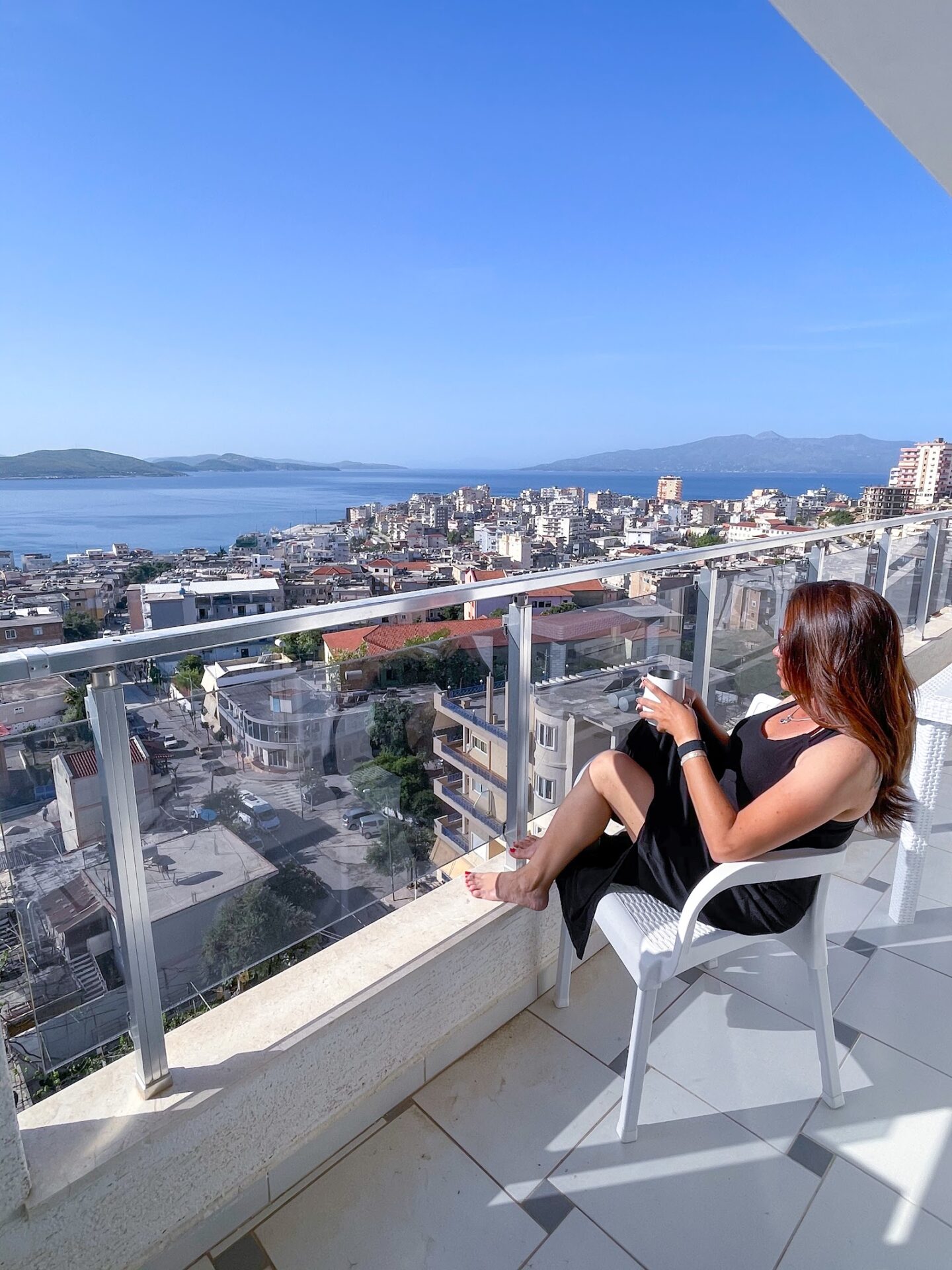
What I paid then vs now
Here’s the real change, in the actual numbers I’ve lived.
One important thing to keep in mind with every euro figure in this post: if you’re American, you’re not paying a fixed dollar amount. My rent is always the same in euros, but it’s never the same in dollars.
When the dollar is weak, that €600 costs me more. When it’s stronger, it eases off. And the dollar hasn’t been strong in a long time, so for the last several months my rent in real dollar terms has crept up on its own, before my landlord raised a thing.
It’s part of why I keep my money in Revolut, which gives me a fair exchange rate when I move dollars into euros instead of losing out at a bad bank rate.
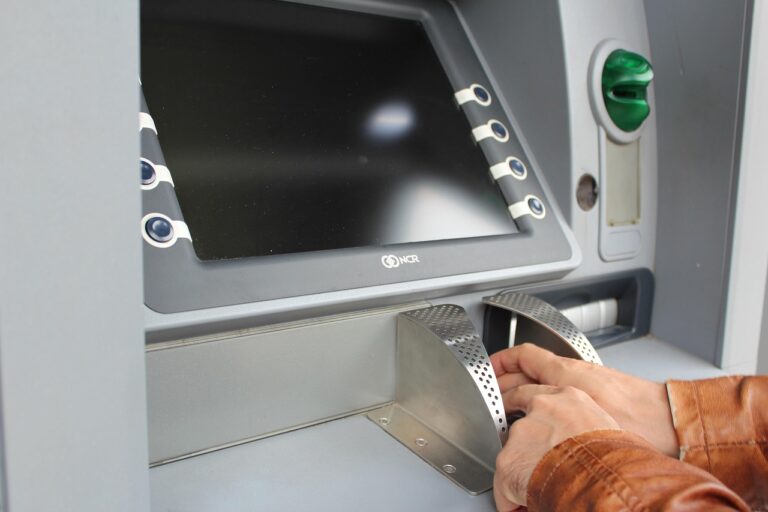
It’s a hidden cost a lot of Americans moving here don’t think about. And since so much here still runs on cash, how you pull that cash out matters too, so it’s worth knowing how to avoid ATM fees in Albania before you arrive.
Rent
When I first moved here, I paid €300 a month for a nice, modern one-bedroom with a sea view, utilities included. Today I’m paying €600. On paper, that’s double in six years.
But that number is a little misleading, and I want to be fair about it. For most of those six years, rent crept up slowly, a bit here and a bit there, the way rent does anywhere. If that were the whole story, €600 now wouldn’t feel dramatic at all.
The real shock came recently. Just four months ago I was paying €400 for my two-bedroom. The moment the contract came up for renewal, my landlord raised it by €200 in one shot, up to the €600 I pay now.
A raise like that, all at once, hits your savings hard and fast.
Eating out
Restaurant prices here have doubled in a lot of places and tripled in others.
One of my favorite plates at a spot I go to often used to be €7. It’s €14 now.
And I want to be fair: that’s not the restaurant owner’s fault. Their ingredient costs have gone up just as much, sometimes double or triple what they paid when they opened. They have to raise prices just to cover what they’re now spending. I don’t blame them for a second.
Coffee
This one hasn’t gone crazy, thankfully. A cappuccino used to be €1.50, and now it’s €2 to €3 depending on where you go. Same small cup, by the way. European coffee, so it’s stronger and smaller than what Americans expect.
I make mine at home most of the time to save money anyway.
Groceries
This is the one that genuinely surprised me. I’m spending around €65 to €80 a week on groceries now. When I first got here, the same week was under €30.
And here’s the context that matters: that’s groceries for one person. Just me. So an exorbitant weekly shop for a household of one tells you something.
It loops back to the same theme as the apartments. You’re paying real money, and the quality and selection don’t always match what you’re spending. Meat especially has always cost more here, no matter what. Beef and pork particularly. Chicken breast has stayed fairly steady, thankfully, but it was never the cheap staple it is back in the States.
Utilities and internet
I have to be straight with you here, because I can’t give you a clean before-and-after.
For my first few years in Saranda, my rent included utilities, so I genuinely have no 2020 number to compare against. It’s only in my current building that I started paying separately: €50 to €80 a month for water and electricity.
I want to be clear: I don’t think that’s expensive at all. That’s a fair price, and I’ve never once complained about it. Very occasionally it tips over €100, sometimes the electricity alone in peak summer with the AC running, but that’s rare. I’m not flagging utilities as a problem. I’m just telling you the number so your budget is realistic.
Internet is actually the one thing that got cheaper. I was paying €20 a month, and I found a new company with the same speed for half that. So €10 now. One small win in a post full of increases.
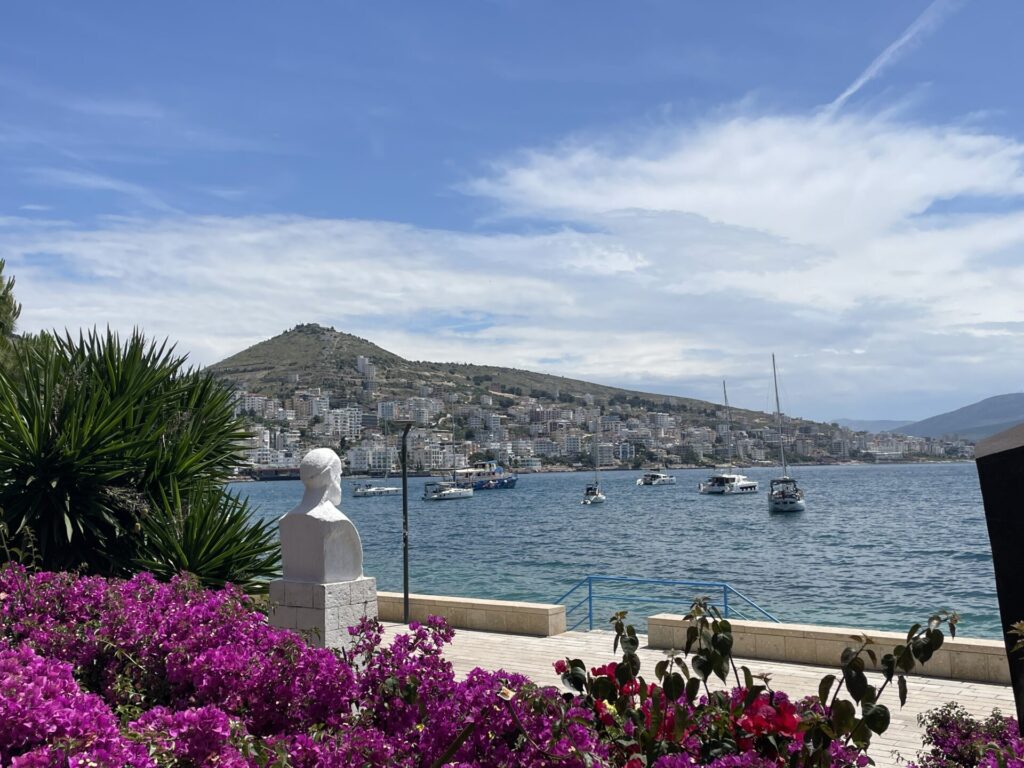
Why costs have risen in Saranda
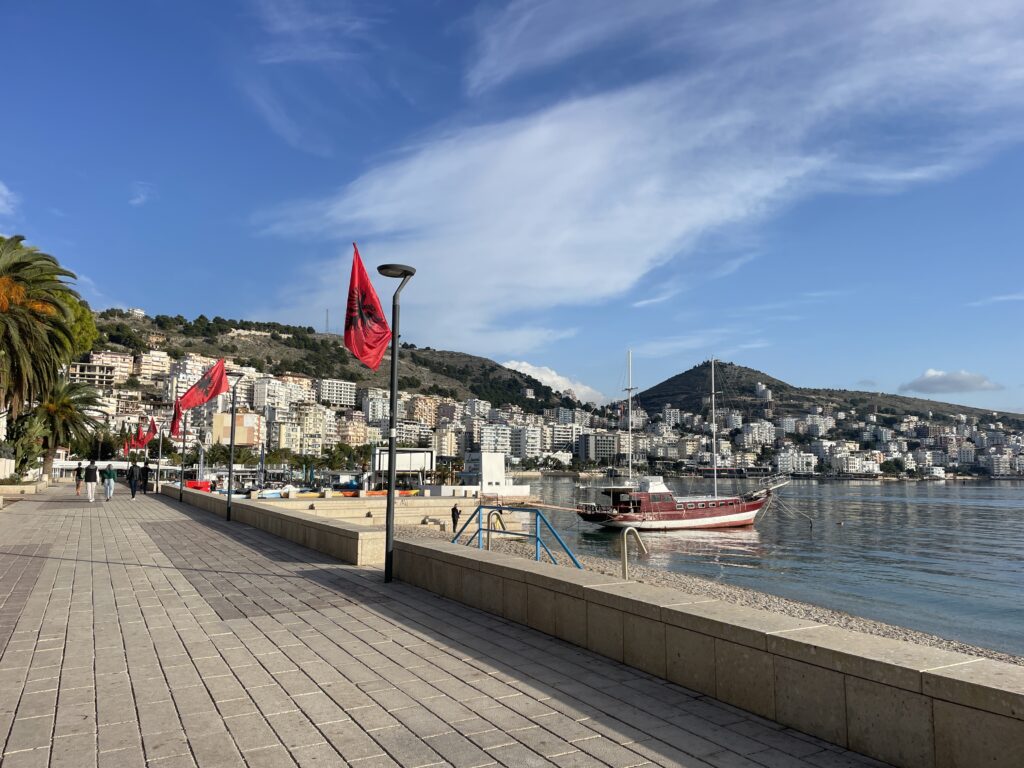
The short version: Albania got discovered, and Saranda got discovered hard.
For the first few years I was here, this stretch of coast had a real tourism boom. People found the southern coast, Saranda and Ksamil especially, and realized how beautiful it is. It got much busier, much faster than anyone expected.
And once word got out that Albania was the new place to be, prices didn’t just rise. They shot up.
I remember when I first got here, Airbnb rentals were around €30 to €50 a night depending on the location. Now, in high season, that same kind of place can run anywhere from €100 to €200 a night.
Take those with a grain of salt, though. They’re not fixed prices, and they could be lower or higher depending on where and when you look. I’m just giving you a rough sense of the range then versus now.
Now here’s the part that actually matters, and it’s bigger than my rent or anyone else’s. This is their country. Their city. Their neighborhoods. And Albanians are the ones getting pushed out of them.
My local friends tell me they’re struggling to rent or even buy apartments in the towns they grew up in, because owners are pricing locals out. They hold out for what a foreigner will pay. So Albanians are being priced out of their own communities, and that is far more upsetting than anything I’ve paid.
In summer it’s worse. People come from all over Albania, and from outside it, to work the season, and they can’t find anywhere to live. Sometimes the hotel or restaurant they work for houses them, 10 to an apartment. If their employer doesn’t, some of them simply can’t take the work, because there’s nowhere they can afford to stay.
I don’t say any of this to speak over locals. It’s their story more than mine. But I’ve watched it happen for six years, and leaving it out would make this post dishonest.
And it isn’t only Saranda. Friends in Tirana tell me the same thing: prices climbing, more people arriving, new buildings going up everywhere to keep pace.
What not to do when you’re searching for an apartment
This one’s for the foreigners moving here, and I mean it with love, because you can genuinely help or hurt the community depending on how you do this.
When you look for an apartment, someone, a landlord or a rental agent, is going to ask what your budget is.
Do not answer that question with a number.
Please, I’m begging you, stop telling people you can pay €1,000 or €1,500 a month. I see it constantly in Facebook groups: “Moving to Albania in October, my budget is $1,500.” And what you’ve just done is set the price. If that apartment actually went for €500, and you’ve announced you’ll pay a thousand, you’re going to be charged a thousand.
It doesn’t stop with you, either. Once locals see foreigners throwing out numbers like that, they start thinking that’s just what apartments cost now. And that is exactly how neighbors get priced out of their own streets.
So do it the other way around. Do your research first, find out what places actually go for in the city you’re moving to, and when they ask your budget, turn it back: “Tell me what this apartment costs, and I’ll tell you if it works for me.”
Practical tip: never name your ceiling. Ask for their price. It protects your wallet, and it protects the community you’re moving into.
A realistic monthly budget today
Quick, honest caveat on my own rent before I give you numbers: €600 is just what I pay. It is not the average, and I don’t want anyone quoting it as the going rate.
In my own building, apartments are going for €750 and up. I’ve even seen someone trying to charge €1,500, which should honestly be illegal. It’s highway robbery, view or no view.
And I already know what some people will say: “but in the States we’d pay way more for an apartment with this view.” Here’s the thing. You’re not in the States.
There’s no comparison, and you shouldn’t be making one. That is not what locals pay here, and it’s not what you should be paying either. View or not, these prices are too high, and they price the locals right out of their own city.
If you want the area-by-area breakdown of where to actually base yourself here, I get into it in my guide to where to stay in Saranda.
So treat these as real ranges, not promises:
- Rent (coast): currently €500 to €750 for a one-bedroom, depending on size, view, and how updated the place is. What it should cost is harder to say, since it depends on location, the view, and whether it’s a studio, one, or two-bedroom, but for what these apartments offer, it should be less than what people are paying now. Inland and away from the tourist towns, much less.
- Utilities (water + electricity): €50 to €80, occasionally over €100 in peak summer. Honestly fair for what it is.
- Internet: around €10 to €20 a month.
- Groceries: €65 to €80 a week for one person.
- Eating out: Depending on where you go, dinner can start at €14. That’s not a lot on its own, but it’s double what it used to be.
- Coffee: €2 to €3 a cup out, but I enjoy my coffee at home for less.
And here’s the hopeful part, because I don’t want to scare you off. It is still possible to find a nice apartment at a fair price. It’s just harder than it used to be, and it often comes down to knowing the right people rather than scrolling listings. The good deals are still out there. They’re just quieter now.
One more thing, and it’s important. I know these numbers look low compared to the States or the rest of Europe, and in a lot of ways they are. But cheap rent and cheap food aren’t the whole picture, and I’d be doing you a disservice if I let you stop there.
When you’re weighing a move, you have to look at everything, not just what a plate of food or a month’s rent costs. Think about infrastructure, healthcare, stability, and easy access to the everyday things you might take for granted back home.
Those matter just as much as the price tag, and they’re the parts people forget to factor in until they’re living it.
So don’t just ask, “is it cheaper here.” Ask whether the whole environment, everything you’re getting and everything you’re giving up, actually matches what you’re paying. Sometimes it absolutely does. Sometimes it doesn’t. That’s a call only you can make, and it’s worth making with your eyes open.
Saranda vs the rest of Albania
The coast is the expensive part. That’s really the whole story with the cost of living in Saranda: it’s climbed far faster than the rest of the country.
Here’s a comparison that shows the gap. I have a friend in a quieter city, closer to Tirana and set on a lake rather than the sea. She and her husband pay €150 a month for a small one-bedroom.
I want to be clear about what that number means, because it’s easy to read wrong. She isn’t getting away with something, and I’m not sitting here feeling I’m owed a €150 apartment. She’s simply paying a fair, normal price for a lovely place with a lake view, the kind of price that used to be normal on the coast too.
The point isn’t “look how cheap I could live.” It’s how far the coast has drifted from the rest of the country. A place I’d pay €600 for in Saranda costs her €150 an hour or two inland. That gap is real, and it’s a big part of why I’m making the move I’m about to tell you about.
Why I’m leaving
I’ve lived in Saranda for six years, and I want to be honest that this is not just about money. There are a few reasons, and they’ve stacked up together.
The cost is one, yes. My rent doubled; my landlord raised me €200 in a single renewal, and the price and the quality stopped matching. That wears on you over time.
But the bigger reason is the people. Every close friend I made here, the ones who became family, has moved away. Every last one. I’m the only one left from 2020.
That’s a strange thing to sit with. Everyone moved on to bigger and better things, and I’m still in the same spot. For a while I couldn’t tell whether I felt stuck, or whether this was a nudge I needed.
I’ve decided it’s a nudge.
Here’s the part I’m actually excited about. I’m moving to a quieter city, closer to Tirana, set on a lake instead of the sea.
Saranda is a long way from the capital, about 5 hours by bus, maybe 4 by car. Where I’m going is roughly 2 hours out and much more central. It’s quieter, it’s on the water, and even though it’s colder in winter, I think that trade-off is worth it.
And being central changes what my life here can be. In six years on the coast, I stayed comfortable. I didn’t explore Albania the way I could have. From up north, I can actually get out and see the country: more of Tirana, more of the north, cities and regions I’ve never made time for.
That’s the real goal. Not just cheaper rent, but finally getting to know the country I’ve been lucky enough to call home, instead of staying in one corner of it.
Here’s what I’ve learned: staying somewhere out of love for what it was can quietly cost you more than the rent does.
So this move isn’t only about a new city. It’s about getting out of my comfort zone again, exploring more of Albania, and honestly exploring more of myself, the adventures I actually want at this stage of my life. I miss my friends, and I’m sad they’ve scattered. But it’s my turn to go find the next thing.
A different city, a different vibe, a fresh start in the same country I already love. It might give me back the feeling I had when I first arrived in 2020. I think it’s worth finding out. If you want the honest version of what that first leap felt like, I wrote about it in starting over in my 40s after moving abroad.
Is it still worth moving to Albania?
Absolutely, yes. If you want out of the US, or wherever you’re from, and you want somewhere more affordable while still living in Europe, come to Albania. I mean that.
And here’s an angle a lot of people don’t consider: Albania makes a great stepping stone. You don’t have to see it as your forever home to make the move worth it. It’s an affordable, easy place to land in Europe first, get your footing, figure out what this life actually feels like, and then move on to the country you really have your heart set on.
Stay a few months, stay a year, then go where you want to go next. There’s no rule that says the first place you move abroad has to be the last. If you’re still weighing where to land, I walk through how to find the right country for you in a separate post.
But visit first. I cannot say this strongly enough.
Come for a month. Two months. Three if you can. See if it’s actually for you, because moving abroad is not for everyone, and I’ve watched a lot of people learn that the hard way.
Before you come, my guide to things to know before visiting Albania will save you some of the surprises, and while visiting you can you can find a place to stay on Booking.com.
What happens, especially with Americans, is the comfort blanket. People are so used to Target, Starbucks, Walmart, Amazon, everything easy and on demand. You don’t have that here. And for a lot of people, giving that up is harder than they expect.
So no matter where you’re from, if you’re thinking about leaving your home country, go visit the place first.
I know that’s a funny thing for me to say, since I moved here without ever visiting. But my situation was different. I was stuck in the US during COVID, living with friends and family, and I needed out for my own sanity.
I was already paying to sleep on a friend’s couch, and for the same money I could have my own apartment here. So the math made sense, and I knew if I hated it I could always go back.
For a permanent change, though? Visit before you decide. Every time.
One thing worth watching: the EU question
I want to flag something, and I want to be clear this is my opinion and a thing to watch, not a fact you should plan your life around.
Right now, Americans can stay in Albania for one year visa-free, then exit for three months and come back for another year. That cycle is how a lot of us live here. For anything official once you’re here, residency, permits, paperwork the government portal is e-Albania, which is where most of that gets handled online.
Albania is working toward joining the EU. As of 2026, it’s an official candidate in active negotiations, and the momentum is real. But it is not a member yet, and it’s still several years away.
The government is aiming to wrap up negotiations by the end of 2027, and most analysts put actual membership around 2030 at the earliest. Nobody knows the exact date, and nothing about the American visa cycle has changed yet. You can follow the official progress on the EU’s Albania enlargement page.
Here’s my worry. If and when Albania joins the EU, the rules for Americans could change. If that one-year cycle became a standard 90-day limit, it would force a lot of people who live here to leave.
I don’t know that this will happen. But it’s the kind of thing I’d want to know before I built a whole life here, so I’m telling you the way I’d tell a friend.
Cost of living in Albania: FAQ’s
How much money do you need per month to live in Albania?
It depends heavily on the city, but on the coast you’re realistically looking at rent from €300 to €750, plus €50 to €80 for utilities, around €10 to €20 for internet, and €50 to €75 a week on groceries for one person. Inland and away from the tourist towns, the rent piece drops a lot. You can live here on far less than most of Western Europe. You just can’t assume the giveaway prices of a few years ago.
Is Albania still cheaper than the rest of Europe?
Yes. It’s still cheaper than the US and most of Western Europe, and that hasn’t changed. What’s changed is the gap. On the coast especially, prices have climbed fast enough that the difference isn’t as dramatic as it was when I arrived in 2020.
Is the cost of living in Saranda higher than the rest of Albania?
Noticeably, yes. Saranda and the southern coast have seen the sharpest rises because of the tourism boom. A place I’d pay €600 for here can cost less than half that an hour or two inland. If your priority is stretching your budget, the coast is the expensive way to do it.
Is Albania cheaper than Portugal or Greece?
Generally, yes, Albania still comes in cheaper than popular expat spots like Portugal or coastal Greece, particularly on rent and eating out. That’s a big part of why so many people are landing here first. Just know the numbers are moving, and the coast is catching up faster than the inland.
Can you live in Albania on a tight budget?
You can, but be smart about where. Skip the pricey coastal towns, base yourself somewhere inland or on a lake, and do your research on real local prices before you ever name a budget to a landlord. The affordable version of Albania still exists. It’s just not automatically the beach anymore.