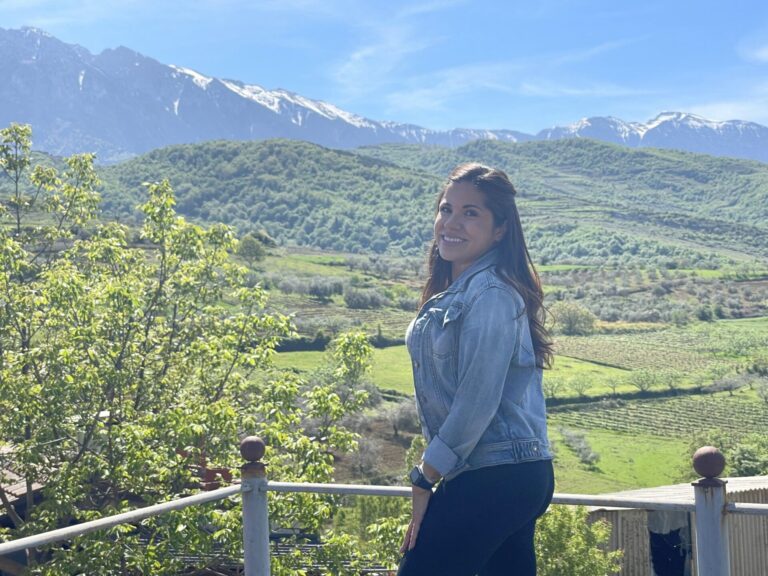
Albania in Winter Is Quiet,
Cold and Still Worth It
Written by Rita Serra | Published Oct 21, 2026
Heads up! This post contains affiliate links, which means I may earn a small commission if you purchase at no extra cost to you. I only recommend what I truly believe in, and your support helps keep this site running and free to access.
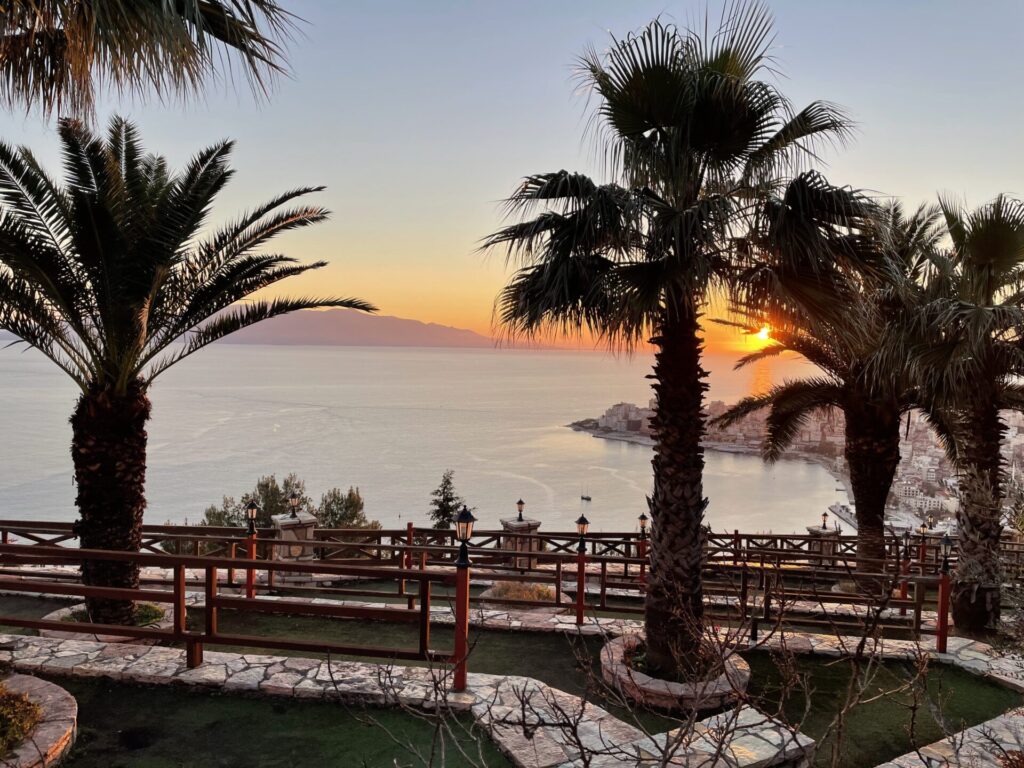
On winter mornings in Saranda, I’m out on my balcony in my warmest pajamas, socks, and a light blanket, with a coffee in my hand and the sea in front of me.
It’s cold. And it’s still my favorite part of the day.
I’ve lived through six winters here. So if you’re wondering what Albania in winter is actually like, I can tell you from experience, not from a quick week in December.
Maybe you’re picturing grey skies, empty streets, and a country that’s closed until June. Maybe you’re worried it’ll be too cold to enjoy.
It does get cold. On the coast you need a coat or a jacket, and from Tirana north it’s a proper winter.
But it’s not the bone-aching cold I grew up with on the East Coast. And the sun shows up far more often than you’d expect.
Who Albania in Winter Is For (and Who Should Skip It)
For most of my life, I was sure I was a summer-only person. Hot weather, sunshine, no cold of any kind.
Living in Albania changed my mind.
I actually like having all four seasons now, because winter here isn’t harsh and aggressive the way it was growing up in New York and New Jersey. When fall and winter roll in, I’m honestly happy for the break from the heat.
So if you enjoy cooler weather but don’t want to suffer through a brutal winter, you’ll love it here.
You get to explore the country without the blazing European summer heat or a harsh northern winter. There are fewer crowds, and you’ll save some money on accommodation compared to peak season.
Here’s who should skip it. If your dream trip is swimming in Saranda and lying on the beach in a bikini, don’t come between November and May. Go somewhere that gives you the weather you want.
And if you really hate the cold? I’d still say give it a chance. I was that person too.
Where to Go in Albania in Winter
Where you go in winter depends on what you want out of the trip. The south is the warmest part of the country and the cities hold up best. Korçë and the north are for people who actually want proper cold and snow.
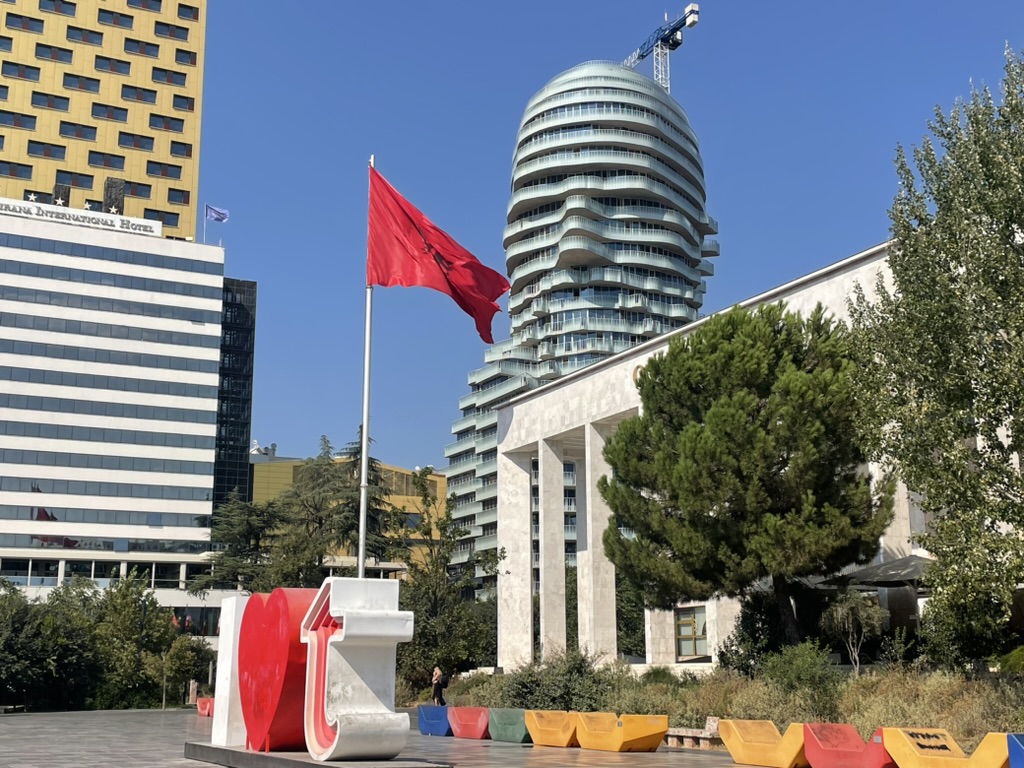
Tirana
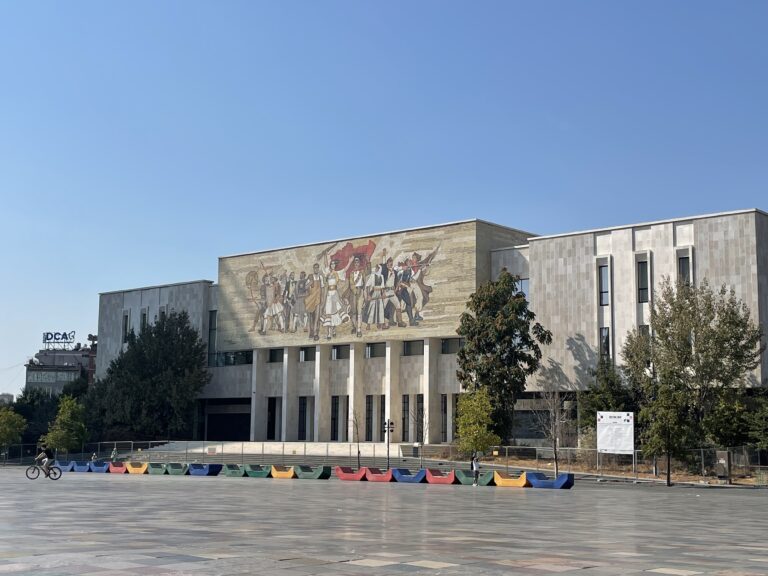
Tirana is my top pick for winter because it gives you a bit of everything.
I’ve spent time here in winter, and the city doesn’t slow down the way the coast does.
Saranda is mostly about the beaches. Tirana is a real city, with landmarks, great restaurants and plenty to see and do no matter the weather.
There are also lots of easy day trips just outside the city. If you just missed summer and still want to see what Albania is all about, start here.
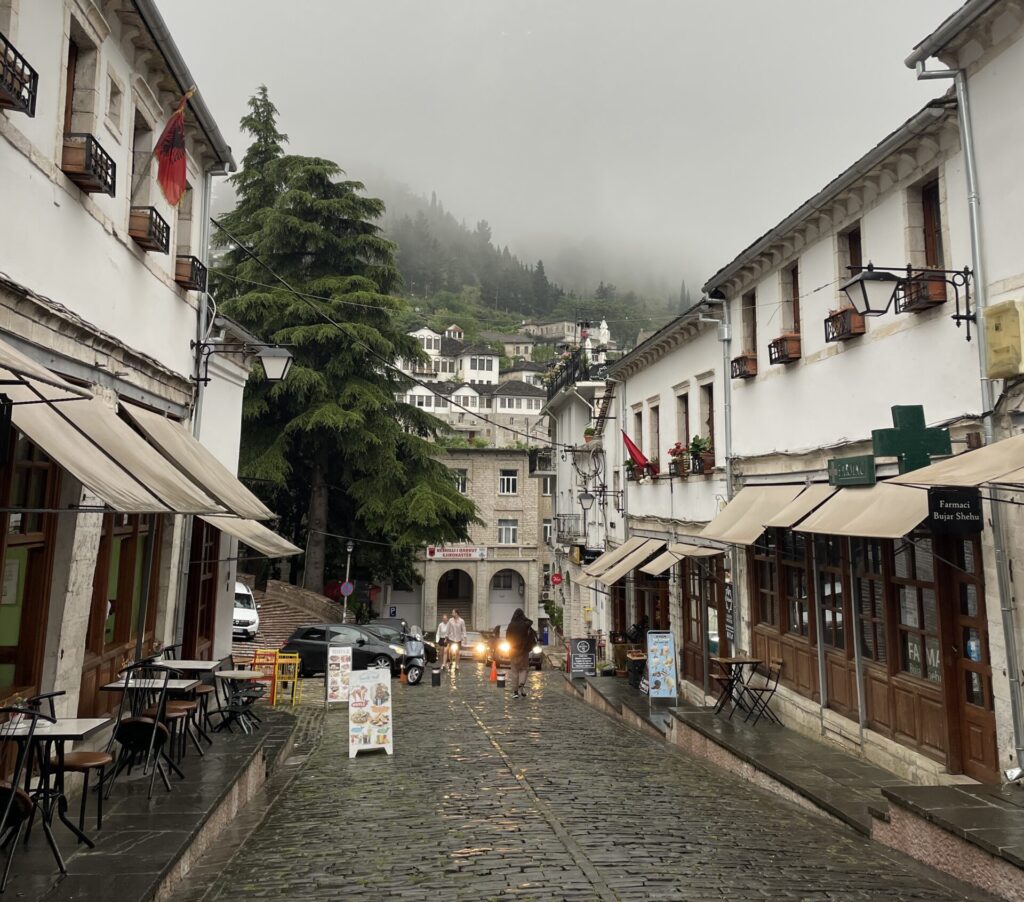
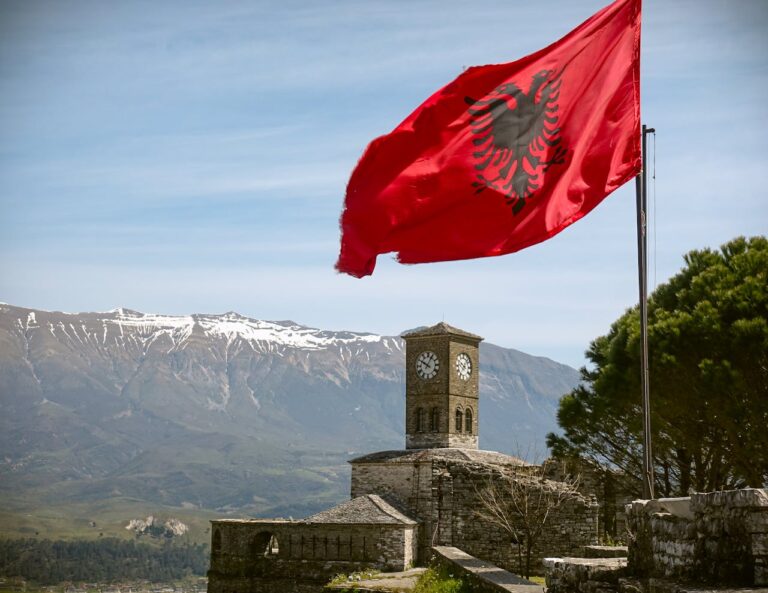
Gjirokastër
Gjirokastër is much smaller than Tirana, but it still has enough to keep you busy. It’s also the kind of place where you can actually slow down.
I’ve visited in winter, and that’s when I fell for it.
You’ve got mountain views, fresh air, small villages nearby, and great food. Summer here is lovely too, but I think the town has a little more mystery to it when it’s colder.
It fits easily into a bigger route. Start in Tirana, head down to Gjirokastër, then on to Berat.
Berat
I absolutely love Berat, the City of a Thousand Windows.
I’ve been in winter too, and it’s one of my favorite places in the country.
Honestly, it’s beautiful in any season if you don’t mind summer traffic and crowds. But like Gjirokastër, it has more wonder to it when it’s a little colder.
There are wineries just outside town that are worth a visit. Give it a day or two before moving on to your next stop.
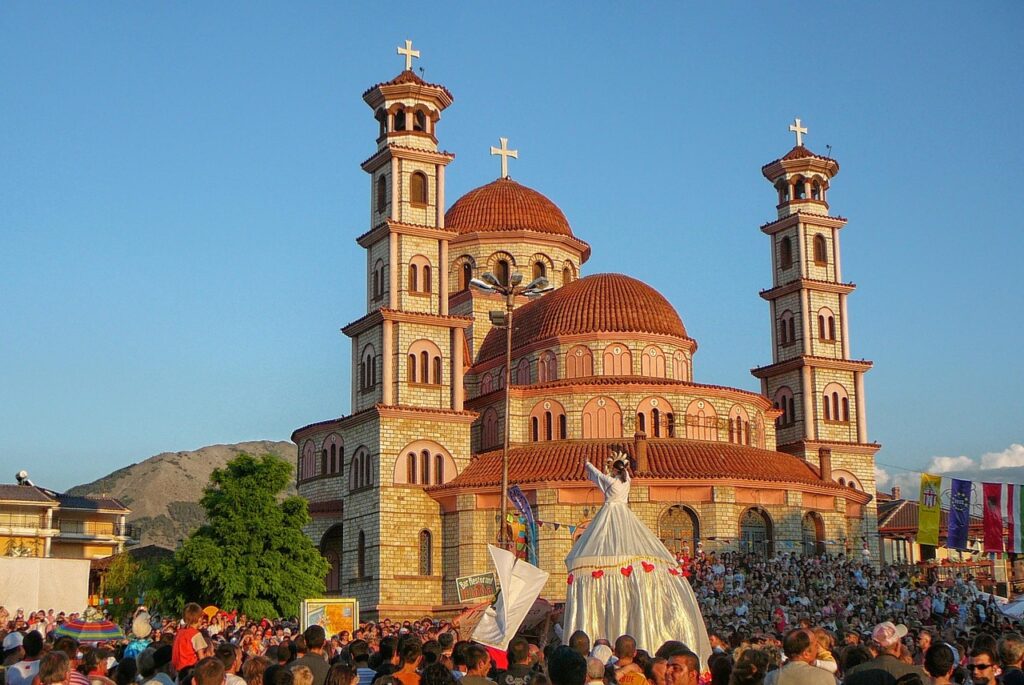
Korçë
I haven’t made it to Korçë in winter yet, but it’s on my list. Every Albanian I know talks about it as the place to be this time of year.
From what I’ve been told, winter is the prettiest time to visit. It’s much colder than the south, but it’s sunny, and the city really leans into the season.
They do Christmas well here. There’s a Christmas market, and while it’s not the big European kind, the whole city gets decorated and has a cozy winter feel that suits its old streets.
If you want snow, the mountain village of Dardhë is only about 18 km away and has a small ski area.
The Coast: Himarë to Saranda
The coast is different, because most coastal towns shut down for winter.
Himarë gets very quiet, and nearly everything closes. Many of the hotels shut, so accommodation is harder to find, and you’d need a car.
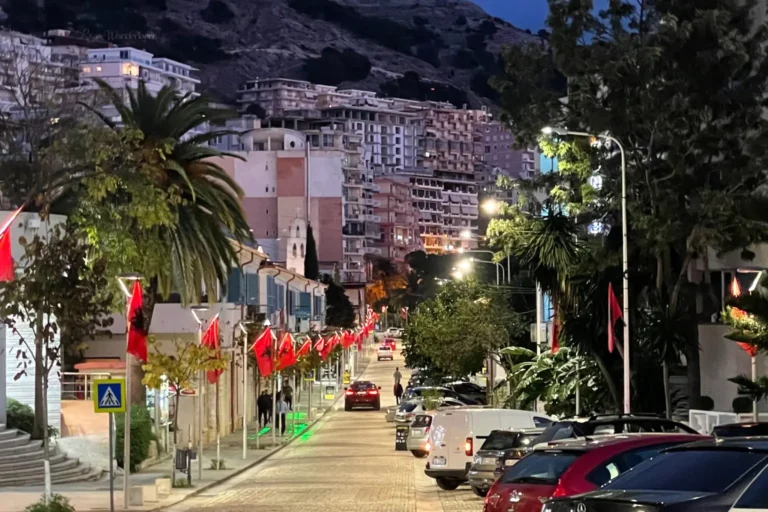
Saranda isn’t as quiet as it used to be. More restaurants stay open through winter now, and while most beach hotels and restaurants close, you can easily find an Airbnb, and a few hotels stay open all year.
You can still walk the beaches. Sunbathing is another story unless you’re fine with the cold.
Ksamil is extremely quiet in winter too, but the beaches are still stunning to walk.
There’s a city bus from Saranda to Ksamil, but it runs less often in winter. To get around the smaller places nearby, you’ll want a car, a taxi, or a private driver.
If you come in October, you might get lucky. Some places are still open, and the weather sometimes stays warm enough to enjoy the beach.
The North: Shkodër, Theth, Lake Komani and the Shala River
I haven’t been up north yet, but a friend of mine lives there and has told me all about it.
If you love lakes, mountains and hiking, the north is your trip. Just know it’s a different kind of winter up here.
In December and January, it’s much colder than Tirana and the south.
If you’re set on the Theth hike, skip winter. Snow often closes the road and the trail, so plan for late spring through early fall instead.
The Lake Komani ferry is seasonal too, so check the current schedule before building your trip around it or the Shala River.
For the rest of the north, renting a car is a great idea. You can explore at your own pace, and there’s a lot to see.
Staying in Saranda? Here’s where I’d stay:
⭐️⭐️⭐️⭐️ Sunset Shoreline Saranda – Sea View & Private Pool – Click here for rates & availability
⭐️⭐️⭐️ Sun N Blue Hotel – Click here for rates & availability
⭐️⭐️⭐️ Victoria Boutique Hotel – Click here for rates & availability
How Cold Does Albania Get in Winter?
It depends a lot on where you are.
In Saranda and along the southern coast, January highs are usually around 54°F (12°C), with nights dipping to about 40°F (4°C). That means coat or jacket weather, but I’ve never needed gloves, a hat, and a heavy scarf here.
Tirana runs a bit colder, especially at night, when it can drop into the mid-30s°F (1 to 2°C). Korçë and the north are a different story. In Korçë, January highs sit around 40°F (4°C), and nights regularly go below freezing.
What it feels like inside
This is the part people worry about, so here’s how it works for me.
Most apartments I’ve lived in here, in Saranda and elsewhere, have an air conditioner with a heat setting. I’ll turn it on in the morning to warm up, sometimes for a bit during the day, then shut it off.
I don’t use heat at night at all. My warm pajamas and a blanket are plenty.
The only time I’ve needed a space heater was in the occasional hotel in Tirana, and that was rare.
The rain
Rain is the real winter weather here, more than the cold.
It usually starts around early to mid-October, when a few days of heavy rain arrive and finally cool things off after summer. On paper, November through January are the wettest months.
In my experience, though, the last couple of winters have brought more rain in February and March. That’s also the dreariest stretch of the year for me. If I had to tell someone which months to skip, it would be those two.
Some days it pours for 20 or 30 minutes, and then it’s done. Other days it rains all day.
When it really comes down, streets can flood, and sometimes the power goes out for a bit.
Even in the rainiest months, we still get plenty of sunny days. It’s not weeks of grey on end. The rain comes in, clears out, and the sun is back.
And the rain doesn’t dampen anyone’s day here (pun intended). People still go out for coffee, walks, and dinner. They just wait out the heavy downpours and carry on.
Bring an umbrella and shoes you don’t mind getting soaked.
The sun makes up for a lot
Albania is known for around 300 days of sunshine a year, and even in winter the sun breaks through often.
That’s what makes Albania in winter so easy to live with. On a sunny January morning, I’m out on my balcony with my coffee, and I can sit out there longer than I can in summer.
Albanians are outside too. Cafés are full all winter, with people sitting outdoors in their coats, drinking coffee like it’s nothing.
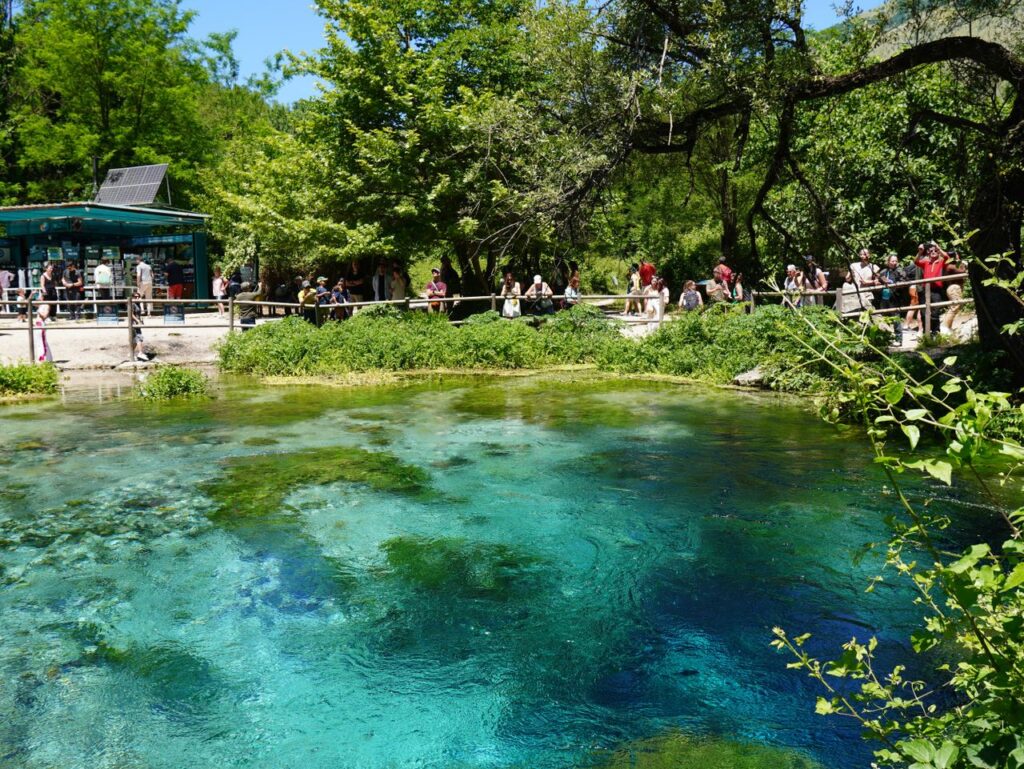
Is the Blue Eye Near Saranda Worth Visiting in Winter?
Absolutely. Funny enough, winter is the only time I’ve seen the Blue Eye near Saranda, and I’d go back then again. It’s one of my favorite things to do in Albania in winter.
When I went, it was nearly empty. I had the place almost to myself and could walk around and take it all in, quietly.
The trade-off is that the restaurant and café up there are probably closed in winter, so it’s just a walk around the spring. They also offer kayaking near the Blue Eye in season. I can’t say for sure, but I’d expect that to be closed too.
What you get instead is the Blue Eye without crowds. It makes for great photos, especially if there’s snow on the mountains in the background, which there often is this time of year.
One thing, whatever the season: don’t swim in the Blue Eye. There are signs everywhere saying not to, and people still do it anyway.
It’s a natural spring, and the water is freezing year-round. Please respect it.
Getting to the Blue Eye from Saranda
When I went, a friend drove me, and back then you could drive right up to the spring. That’s changed.
Now you park at the entrance car park and either walk about 20 minutes to the spring or take the little tourist train for around €3 one way. Entry is 50 lek per person, cash only.
From Saranda, you have a few options.
A taxi is the simplest. You can also take the Saranda to Gjirokastër bus and ask to be dropped at the Blue Eye. Check with the driver when you buy your ticket, though, because some buses now take the tunnel route and skip the turn-off.
The easiest option is a tour. There are several on GetYourGuide that pair the Blue Eye with Gjirokastër or Lekursi Castle, so the transport is handled for you.

Getting Around Albania in Winter
I get around Albania by bus and furgon, and winter doesn’t change that much.
Buses run between cities every day, even on holidays, because locals travel year-round. This isn’t a summer-only service.
I buy my tickets in the city center or online when that’s an option, whether I’m going from Saranda to Tirana, Gjirokastër, or anywhere else. Departure times can shift a little in winter, so double-check before you go.
Renting a car or hiring a taxi gives you more freedom to travel your own way. Honestly, though, I’ve always been fine on the bus.
The Corfu ferry in winter
I take the ferry to Corfu in winter too, but it runs much less often. From around mid-November to early March, there’s just one sailing a day in each direction.
The schedule doesn’t work for a day trip. If you go from Saranda to Corfu, plan to spend the night and come back the next day.
Wind also cancels sailings more often in winter. If you have a flight out of Corfu, give yourself a buffer day.
What to Pack for Albania in Winter
Layers are everything. The weather changes a lot depending on where you are in Albania, so pack light to heavier pieces you can add or take off as the day goes.
If you warm up, take a layer off. If you get cold, put one back on.
Here’s what I’d bring:
- A rain jacket and an umbrella
- Comfortable sneakers for walking
- Rain boots, or basic water-resistant boots
- A warmer coat for evenings and colder towns
- Warm pajamas and socks, since apartments aren’t always toasty in the morning
If you’re heading to Korçë or the north, add a proper winter hat, gloves, and warmer boots. That’s a different kind of cold from the coast.

Is Albania Better in Winter or Summer?
It honestly depends on you.
I’ve lived here long enough to enjoy every season, and I love summer. The beach, swimming, all of it.
But my real favorite times of year are fall and spring. It’s a little chilly, but it’s the mildest, nicest weather, not too hot and not too cold. Swimming isn’t always ideal then, but for everything else, the weather is perfect.
So if your dream trip is sunbathing, swimming, and everything summer brings, come in summer. That’s your season.
If you’d rather hike, explore the cities, and wander without the sweltering heat, come when it’s cooler. Just do your research on what’s open before you go, especially on the coast.
As for me, I’ll be on my balcony this winter with my coffee and my blanket, soaking up the sun. Albania in winter is quiet and a little cold, and still worth it.
Albania in Winter Is Quiet, Cold and Still Worth It FAQs
Is Albania worth visiting in winter?
Yes, if you’re after cities, history and quiet rather than beaches. It’s cold but not harsh; there are far fewer crowds, and accommodation costs less than in peak season.
What is the warmest place in Albania in winter?
The south. In Saranda, January highs are usually around 54°F (12°C), and a coat or jacket is enough. The further north you go, the colder it gets.
Does it snow in Albania?
Yes, mainly in the mountains, the north, and around Korçë. Dardhë, near Korçë, even has a small ski area. On the southern coast, you’ll see snow on the mountains far more often than in town.
Is everything closed in Albania in winter?
Not everything. Most beach hotels and restaurants on the coast close, and towns like Himarë go very quiet. Cities like Tirana, Gjirokastër and Berat stay open year-round, and more of Saranda stays open every winter.
Can you swim in Albania in winter?
Not really, unless you’re fine with cold water. If you come in October, you might still catch a warm beach day before things cool off.
Do buses run in Albania in winter?
Yes. Buses between cities run every day, even on holidays, because locals travel year-round. Departure times can change a little, so double-check before you go.
Does the Saranda to Corfu ferry run in winter?
Yes, but there’s only one sailing a day in each direction from around mid-November to early March. That means no day trips, and wind can cancel sailings.