Is Albania Safe for Solo Female Travelers? The Honest Answer After 6 Years Living Here Alone
Written by Rita Serra | Published Nov 11, 2026
Heads up! This post contains affiliate links, which means I may earn a small commission if you purchase at no extra cost to you. I only recommend what I truly believe in, and your support helps keep this site running and free to access.
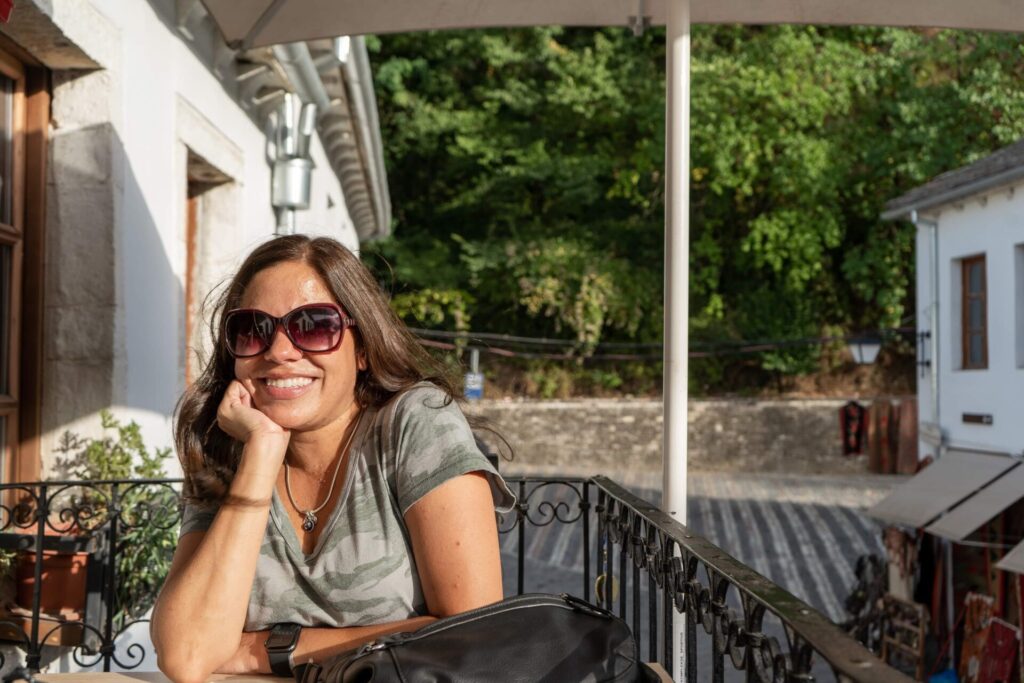
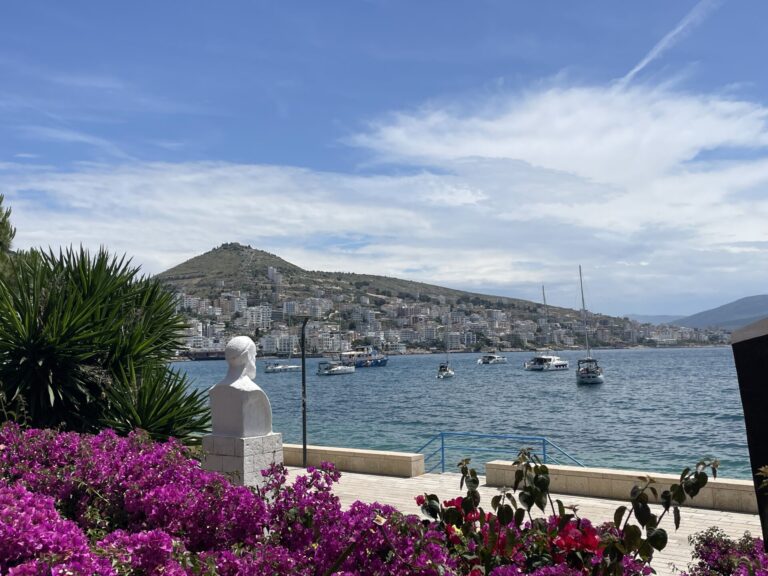
In my first year in Albania, I lived in Saranda, up the hill on the fourth road. Still technically the center, but high enough up that getting anywhere meant a real walk.
One night I went to a friend’s get-together on the far end of the Kodra neighborhood, and by the time I left it was around half past one, maybe closer to two. I was tired; I didn’t have a taxi or a ride, so I walked. Thirty, maybe forty minutes home.
Two other people walked part of the way with me, but they’d been drinking and weren’t really paying attention to me or anyone else. For the first ten minutes, I did what I always do. I scanned the street and wondered if I should be nervous this late.
And then, without deciding to, I stopped.
The streets were quiet. The only people out were the ones who clean up at night and the bakers setting up before dawn, and not one of them so much as glanced at me.
I wasn’t safe because someone was watching out for me. I just was.
Here’s what still gets me about that night. Back in the States, I could be in my own car, doors locked, driving through my own neighborhood, and feel more anxious than I did walking across a city at 2 am on foot.
That’s the honest answer to the question that brought you here: yes, Albania is safe for solo female travelers. I’ve lived here six years, alone, and I’ve walked home late in more than one Albanian city without once doubting it.
I’m not going to tell you it’s perfect, or that you should ever take your safety for granted anywhere. Things happen, and a lot of it is case by case. But the longer answer, the one with the real caveats, is why you should keep reading instead of trusting a blog that only shows you the postcard.
Is Albania Safe for Solo Female Travelers? The Short Answer
Here’s the short version: I walk home alone at night, I take buses and shared rides across the country, and I leave my bag on a beach chair when I go for a swim.
But safe doesn’t mean perfect. No country is. I’ve dealt with unwanted attention, a taxi trying to charge me more, and landlords who weren’t always honest.
Here’s the thing. Those things happen everywhere, and none of them ever made me feel like I needed to leave.
The same rules apply here as anywhere else: use your common sense, stay aware of your surroundings, and do your research before you go.
For context, the US State Department rates Albania at Level 2, “Exercise Increased Caution,” mainly because of crime. It doesn’t advise against travel to any part of the country.
What I Knew Before I Came
When I told my family I was moving to Albania, their first question was, “Armenia?” No. Albania.
The only thing anyone back home knew about it was the movie Taken, where Albanians are the bad guys. That reputation still follows Albania around. Between movies and old headlines, a lot of people picture somewhere dangerous and never get a newer picture.
So if you’re nervous, I get it. Honestly, I didn’t know much more than they did.
Years before I moved here, I found a blogger who had been living in Albania for a few years as a solo female traveler. She loved it. She never felt afraid.
She wrote about how kind, welcoming, and curious Albanians were, and how affordable it was to travel around compared to the rest of Europe. I added Albania to my list right then.
Then life happened. I left the US in 2018 for a year of solo travel, changed my route at the last minute, and went from Europe straight to Southeast Asia without ever making it here.
When COVID hit, I was back in the US with no apartment of my own, moving between my sister’s place and a friend’s. Everyone was kind, but I felt like I was invading their space. I needed a home again.
That’s when I remembered the Albania Facebook group I’d joined years earlier. I started watching people help each other, meet up, and share advice, and it felt like it was calling my name.
By fall 2020, Albania was one of the very few countries still open to visitors, with very few restrictions. So I booked a one-way ticket.
My family was hesitant. But they knew I’d just spent a year traveling alone, and they trusted that I’d done my research.
The Night I Knew I’d Be Okay
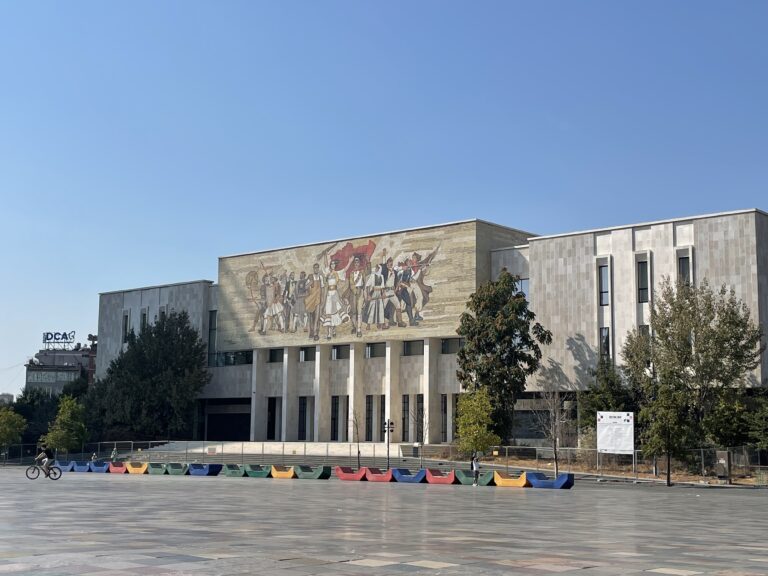
I landed in Tirana on October 30, 2020. A friend had arranged a taxi for me, so all I had to do was find the board with my name on it. The driver was lovely. He helped with my three suitcases and took me straight to my Airbnb, where the host was just as kind.
It was evening, and I was starving. I had done zero research on Tirana, which, looking back, I should have. The host told me to walk down the street to the main road, where I’d find plenty of places to eat.
The Airbnb was down a dark, quiet side street. It was a little creepy, I’ll admit it. I walked into the first place I found, ate quickly, and went straight back. I like to explore new cities during the day, when I can actually see where I am.
But here’s what surprised me. Even on that dark street, I didn’t feel unsafe. Maybe it was because I’d already been traveling for a year. Maybe it was a little bit of naivety. I honestly don’t know. I found out later I’d been staying in Blloku, one of the most popular neighborhoods in Tirana.
The next morning, the host’s mother had breakfast waiting for me. She didn’t speak any English, but she made more food than I could possibly eat, and I really tried. That warmth relaxed something in me. I remember thinking, okay, I think I’m going to be okay.
The five-hour ride to Saranda
From Tirana, a friend of a friend drove me five hours south to Saranda. I know how that sounds, so let me explain.
He wasn’t a stranger I’d messaged once. He was one of the most active members of the expat Facebook group I’d been part of all summer, and I’d gotten to know him over several months. He was also friends with the woman who’d helped me find my apartment.
He owns a restaurant in Saranda and splits his year between there and his family. We talked the whole way, stopped twice for coffee and the bathroom, and I took in the country little by little. Every single interaction, from the airport to my apartment door, was a good one.
Practical tip: If you’re connecting with people online before a trip, take your time getting to know them. Ask around, watch how they show up in the community, and trust your instincts.
My situation worked out, but that doesn’t mean it will for everyone. If anything feels even a little off, don’t do it. When I finally walked into my apartment, it was even better than the photos. I remember feeling like I could breathe again.
What I planned as six months turned into six years.
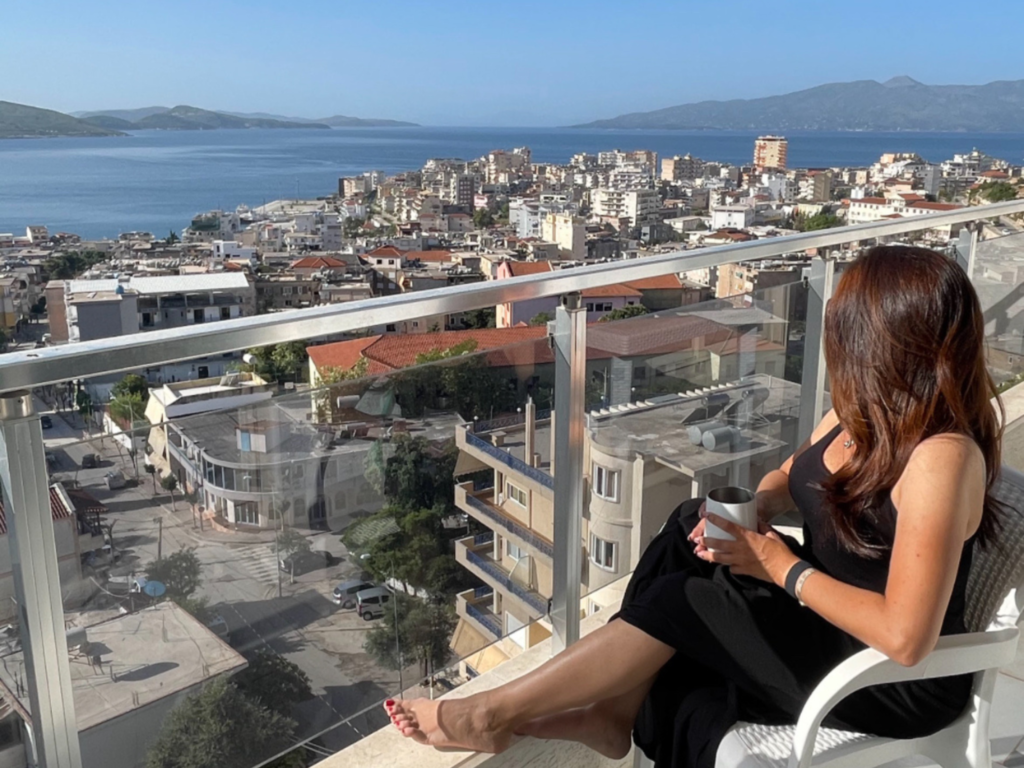
What It’s Really Like as a Woman Here
This is the part most safety posts skip, so let’s talk about it. Feeling safe isn’t only about crime. It’s also about how people look at you, talk to you, and treat you when you’re out on your own.
Some of what you’ll notice here is completely harmless, just different from what you’re used to back home. Some of it is uncomfortable, and I won’t pretend otherwise. Knowing the difference is what helps you relax and what tells you when to trust your gut.
The Albanian stare (and why it’s usually harmless)
One thing to know before you come: people here stare. Not just in Albania, but across the Balkans. It’s mostly the older generation. You’ll walk past and feel someone watching you, and they won’t look away when you catch them.
The first time, it can feel unsettling. But it’s almost always genuine curiosity. They’re wondering who you are, where you’re from, and what brought you here.
I’ve been told it goes back to the communist years, when watching each other was simply part of life, and the habit never quite went away. I can’t say for sure that’s the reason, but the stare itself is very real.
Younger people do it sometimes too, but it’s mostly the older ones. It’s normal, and it’s nothing to be afraid of.
A curious look is one thing. A man who keeps staring while he pushes to talk to you after you’ve said no is something else, and that’s what the rest of this section is about.
Unwanted attention
Yes, there is unwanted attention here, and it can be uncomfortable. Some men, often the younger ones, are very forward in what they consider flirting. You say no, and they keep talking.
Some assume foreign women are here for a fling. That’s not all Albanian men, not even close, but it’s something I and other women I know have experienced.
The Instagram problem nobody warns you about
This one caught me off guard. When I post a photo and tag my location, I sometimes get messages from men I don’t know.
“Do you live here?” “I know exactly where this is.” “Let’s go out.” Some messages are just plain inappropriate.
I never respond. Not once. Any attention, even a “no thanks,” tends to encourage them, so I block and move on.
Practical tip: Wait until you’ve left a place before you tag it. Posting your exact location in real time tells strangers exactly where to find you, and that’s true in any country.
In person
When a man makes me uncomfortable in person, whether he’s staring or pushing his version of flirting, I shut it down fast. I say I’m not interested, or that I have a boyfriend or a husband, and I walk away. I don’t engage at all.
Something I’ve seen happen to other women in the expat community is worth knowing. A few have been followed or made to feel uncomfortable by a man.
When they stood up for themselves, other Albanians nearby often stepped in to help and made it clear his behavior was wrong. It doesn’t always happen. But it happens often enough that it’s stayed with me.
A word worth knowing: besa
Albanians have a word, besa. It roughly means keeping your word, a promise built on honor and trust, and it’s a value that goes back generations here.
I can’t tell you every person in Albania lives by it. But I’ve felt something like it since my very first night.
The host’s mother cooking me breakfast. A man I’d only known online driving me five hours to Saranda without asking for anything. Strangers stepping in when a woman stood up for herself.
That’s not just good manners. Taking care of guests runs deep in this culture, and as a woman on my own, I’ve been on the receiving end of it again and again.
Not everyone stays
I want to be fair here. I know women who didn’t feel comfortable in Albania and left. That’s their experience, and I respect it.
From what they’ve told me, it wasn’t because they were afraid of being hurt. It was because the constant attention made them uncomfortable enough that this wasn’t the place for them.
Your experience might be different from mine. That’s okay. If you want to hear more about the harder side, I wrote about it in my post on living abroad solo.
The Real Risks Nobody Talks About
Here’s what actually catches people out in Albania, in my experience. None of it is the kind of danger people picture when they think of Taken. Apart from the roads, these are everyday things that are more likely to frustrate you, cost you a little extra, or catch you off guard than put you at real risk.
Knowing about them ahead of time takes most of the sting out. Here’s what I’ve run into over six years, and what I’d do about each one.
The roads
Driving in Tirana is not for the faint of heart. It’s hectic and busy, and it often feels like there are no rules. Drivers don’t seem to care much, and it’s every driver for themselves.
Outside the capital, it gets easier. The main highways aren’t so bad, and neither are the smaller towns, but it’s still not as simple as driving back home.
Albania is still developing. The roads have gotten better over the years I’ve lived here, but there’s a long way to go.
Practical tip: If you’re not a confident driver, skip driving in Tirana completely. Buses, furgons and shared rides will get you between cities without the stress.
Taxis charging more
Some taxi drivers will try to charge foreigners more than the going rate. I wouldn’t call it a scam so much as something that just happens here. Agree on the price before you get in, or ask a local what the fare should be.
Scams
Scams do exist, but in my six years, they’ve been rare. Albania doesn’t have the scam culture you’ll find in some big tourist cities.
Pickpocketing
I’ve never had my bag stolen or been pickpocketed here. In my experience, it’s far less common than in places like Spain, Italy or France. Still, I keep my bag in front of me, and you should too.
Stray dogs and cats
You’ll see a lot of street dogs and cats, especially outside the big cities. Many aren’t spayed or neutered, and while expats and locals try to help, there’s only so much they can do.
The good news is that most of them are friendly. Tourists and residents feed them, and in six years I’ve rarely seen an aggressive one. I’ve never felt unsafe around them.
Landlords and getting things fixed
If you’re staying longer, this is the honest negative that has affected me most. Finding an honest landlord, getting a fair rate, and getting repairs done on time hasn’t always been easy, and I’ve been lied to more than once. It’s frustrating, but it’s not unique to Albania.
Where to Start Your First Solo Trip
If you’re nervous, start in Tirana. It’s a busy capital with lots of people around, plenty of restaurants and things to do, and it’s an easy first step into the country.
That said, I think you’ll be fine wherever you start, whether that’s Saranda, Berat or Gjirokastër. If you want a route to follow, my 7-day Albania itinerary starts in Tirana and works its way down the coast.
You’ll notice I’m not giving you a list of places to avoid. That’s on purpose. I haven’t been everywhere in Albania, and I won’t tell you a place is unsafe when I don’t actually know.
When I do tell people to skip somewhere, it’s usually because it’s overrated or overpriced, not because it’s dangerous.
Getting Around Safely
When I travel between cities, I take either a shared ride or a furgon (a minibus that runs between towns). A shared ride works like a taxi you split with other passengers, so it costs much less than a private car.
I’ve used both during the day and at night and felt completely fine. But I’ve been doing this for years. If you’re new to Albania, or to solo travel in general, here’s what I’d do.
Travel during the day
This goes for any country. Daylight means you can see where you are, there are more people around, and it’s easier to ask for help if you need it.
If you have to travel at night, pay a little more
Skip the bus and take an official taxi rather than a private driver. A registered taxi is easier to track if something goes wrong. Yes, it costs more. But if you’re nervous, your peace of mind is worth it.
Ask in the expat Facebook groups
Nearly every city in Albania has its own expat Facebook group, including Tirana and Saranda. Join the one for wherever you’re headed and ask which taxi companies people trust. Many take bookings by WhatsApp, which makes life much easier.
The expats in those groups will be your best resource. They live there, and they’ll give you the go-to tips for that specific town.
What I’d Actually Do to Stay Safe
Dress respectfully
I dress here the same way I would back home. Albania is fairly relaxed about what you wear, but it can be modest in some ways.
A bikini on the beach is completely normal. Walking through town or into a shop in one is not, and it’s not something Albanians would do. Cover up when you leave the beach, and look up the cultural norms of any country before you go.
Keep your bag in front of you
Even here, where I feel comfortable, I keep my bag in front of me. Better safe than sorry, no matter where you are.
Keep an emergency stash
This is the best tip I’ve learned from years of travel. Carry the card and cash you use every day, but keep a backup card and some emergency cash somewhere else, like a different pocket of your bag or your room.
If something gets lost or stolen, you’re not stuck. Your backup could be a Revolut card, a travel credit card, or any extra card you already have. What matters is having one.
Stay connected
Wi-Fi is everywhere in Albania. Cafés, restaurants, and beach bars almost always have it, and they’ll happily give you the password. But for getting around, having data in between those places makes a big difference, especially for maps and booking taxis.
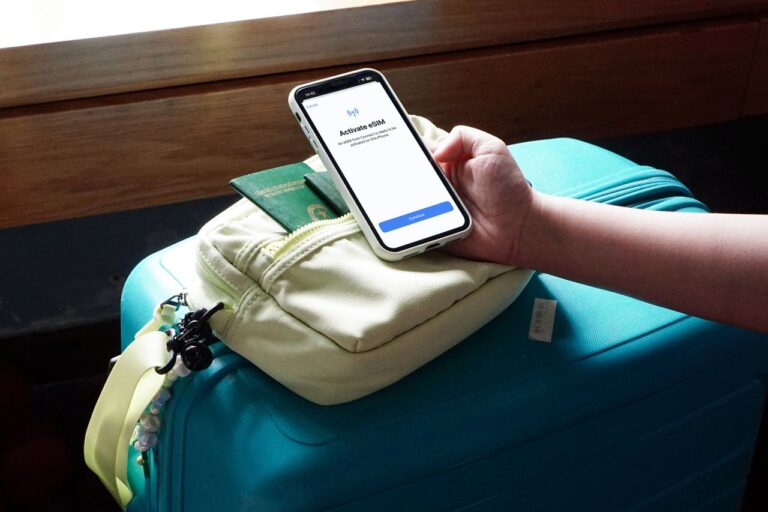
If you’re here on a short trip, an eSIM like Airalo is the easiest option, since it’s ready the moment you land. If you work online and need lots of data, look at Holafly, which offers plans built for heavier use.
For a local SIM instead, I break down exactly which one I use in my guide to the best SIM card in Albania.
Get travel insurance
Please don’t skip this. If you have a travel credit card, call them and ask exactly what their travel insurance covers.
If it’s not enough, a dedicated policy like World Nomads covers you in case of emergency. If you’re moving here long-term, research what local health insurance options are available and what they cost each month.
Emergency Numbers to Save in Your Phone
Save these before you arrive.
- 112: general emergency number, for police, ambulance, or fire
- 129: police
- 127: ambulance
- 128: fire
- 126: traffic police
If you’re a US citizen, the US Embassy in Tirana is at Rr. Elbasanit, No. 103, and its phone number is +355 4 2247 285, which also works for emergencies.
It’s also worth signing up for the State Department’s free Smart Traveler Enrollment Program (STEP) before your trip. It sends you safety alerts and helps the embassy reach you in an emergency.
Is Albania Safe for Women Over 40?
This is the question almost nobody answers, so here’s my take. How safe you feel over 40 depends a lot on the kind of traveler you are.
If you’ve never traveled solo or lived abroad before, everything is new, and that can make you feel like the odd one out. Like you’re the only woman your age doing this. You’re not. There are so many of us. It just takes time to find your groove and figure out what makes you feel safe and comfortable.
The younger women I’ve met here travel differently. They’re more carefree, more fearless, more unguarded. They tend to leap first and think later. That’s not a criticism. It’s just what I’ve seen, and what they’ve told me.
Life experience makes us more careful. And that caution is a strength, not a weakness.
How locals treat me
In my experience, younger women get more unwanted attention than I do. Some of that is probably because they go out and socialize more, while I’m more reserved and keep to myself.
What I get more of is curiosity. When locals meet a woman over 40 who’s unmarried, has no kids, and lives abroad alone, they don’t always understand it. They wonder why I’d choose this life instead of marriage, children, and a home in the US.
But it’s curiosity, not judgment. And I’ve never felt treated with less respect because of it. If you’re wondering whether it’s too late to do something like this, I wrote about that in Confident Travel Over 40.
So, Is Albania Safe for You?
If you asked me today whether it’s safe to travel to Albania alone, I’d tell you yes. Absolutely.
Use your common sense, stay aware of your surroundings, and do your research. Things happen. Nowhere is perfect. But in general, Albania is safe, and you’ll have a wonderful time getting to know the people, the cities, and the food.
I came here alone, not knowing what to expect. Six years later, I’m still here. (If you want the full story of how that happened, it’s in Moving Abroad in My 40s.) Have you traveled to Albania solo, or are you thinking about it? Tell me in the comments. I read every one.
Is Albania Safe for Solo Female Travelers FAQs
Is it safe to walk alone at night in Albania?
In my experience, yes. I walk home alone at night regularly and have never felt unsafe. If you’re new to a city, stick to busier streets until you know the area.
Is Albania safer than other European countries?
Every country has its risks, so I won’t rank them. What I can say is that pickpocketing and petty theft have been much less of an issue for me here than in places like Spain, Italy or France.
What is the US travel advisory for Albania?
The US State Department rates Albania Level 2, “Exercise Increased Caution,” mainly because of crime. It doesn’t advise against travel to any region. Check the official advisory before your trip, since levels can change.
How long can Americans stay in Albania?
US citizens can stay in Albania for up to one year without a visa. To start a new year, you need to leave Albania for at least 90 days before coming back.
Are taxis safe in Albania?
Generally, yes. Registered taxis are the safer choice, but I’ve used private drivers too. If you go that route, find one through a local expat Facebook group and check that others have used them before.
Do I need travel insurance for Albania?
I’d never travel without it. Check what your credit card covers first, then get a dedicated policy if you need more.