15 Free Places to Visit in Edinburgh
for First-Time Visitors
Written by Rita Serra | Published Sept 03, 2026
Heads up! This post contains affiliate links, which means I may earn a small commission if you purchase at no extra cost to you. I only recommend what I truly believe in, and your support helps keep this site running and free to access.
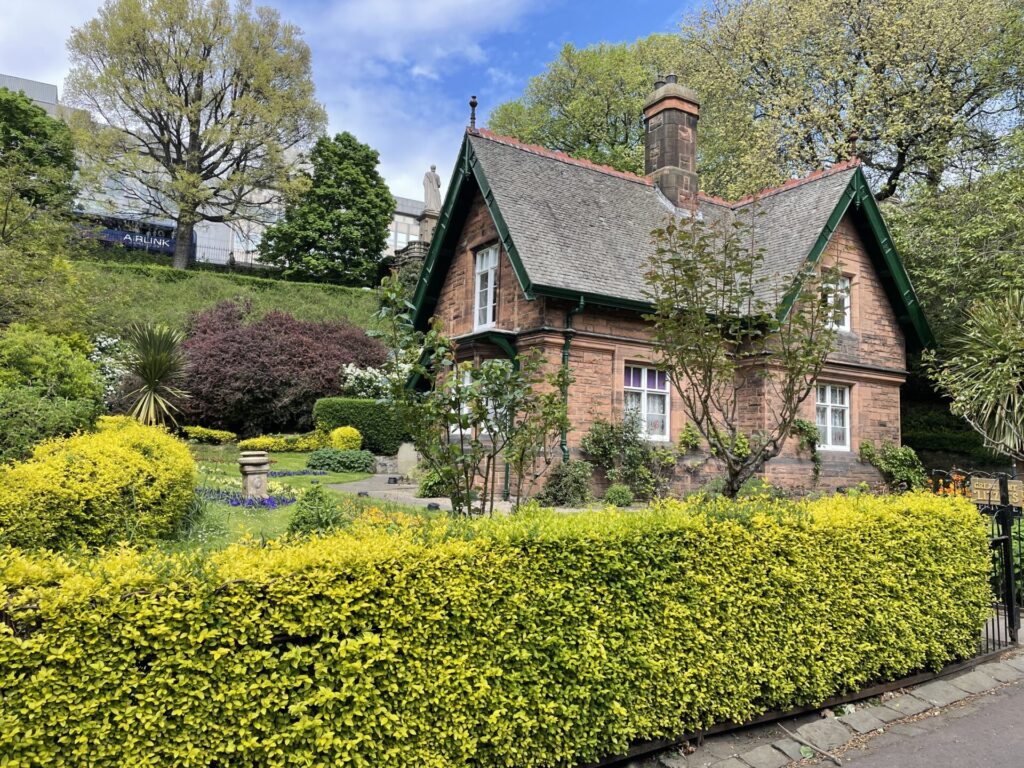
Planning your first trip to Edinburgh and trying not to blow your whole budget on the first day? These are the 15 free places to visit in Edinburgh that I personally keep going back to.
Here’s the thing about this city: some of the best parts of it are free.
I’m not talking about a consolation-prize list of things to fill time between the paid attractions. I mean the views, the photo spots, and the walks I keep coming back to, seven visits in.
I first landed in Edinburgh in 2018 and fell for Scotland almost immediately. Since then I’ve been back at least seven times, and I still leave every trip feeling like I missed something.
This is a resident-of-Scotland-at-heart list, built for one specific person: someone visiting Edinburgh for the first time, whether it’s your first big trip or you’re a seasoned solo traveler, who wants to see the beautiful, historic, photogenic parts of the city without spending a pound to do it.
Use this as a menu, not a checklist. These are the 15 free places I personally keep going back to. Free, walkable, and genuinely worth your time.
What to Know Before You Go
A little planning goes a long way here, and if you’re mapping out a bigger trip around this one, my guide to long-term travel planning covers the logistics. For Edinburgh specifically, here’s what’s worth knowing before you go.
Who this list is for
First-time visitors who want the beautiful, historic, photo-worthy version of Edinburgh without spending their whole travel budget. Use it as a menu, not a checklist. Even after seven visits, I haven’t done everything in one trip, so don’t put that pressure on yourself.
Best time to visit
I’ll be honest: there’s no bad time, but the season changes the kind of trip you get.
Summer means long days and very late sunsets. If you’re waiting for the sun to go down over Calton Hill in June, you could be waiting past 9 pm, so plan your evening around it rather than assuming an 8 pm golden hour.
Winter gives you far fewer daylight hours but moodier photos, which honestly suits Edinburgh.
Early morning is your friend either way. Fewer crowds, quieter streets, and on the popular photo spots, that’s the difference between a clean shot and a wall of people.
And rainy or foggy weather? Don’t write it off. Edinburgh can look even more atmospheric when the fog rolls in.
Getting From the Airport to the City
From Edinburgh Airport, the two easiest ways into the city are the tram and the bus. The tram runs right from outside the main terminal, next to the plaza and the big Edinburgh sign, and takes about 30 minutes to reach the city center.
It runs every 7 minutes for most of the day, with the first departing at 6:30 am and the last at 10:52 pm, and it drops you at central stops like Haymarket, Princes Street, and St Andrew Square, the last of which is a short walk from Waverley Station.
If you’d rather take the bus, the Airlink 100 and services 17 and 18 all connect the airport to the city, and you’ll find the stops just outside the terminal.
You can buy tram tickets at the machines at the airport stop, or in advance through the Edinburgh Trams app or their ticket site, whichever is easier. Waverley itself is the main train station and sits right in the heart of everything on this list.
Getting Around the City
This is the easy part. Edinburgh is one of the most walkable cities I’ve been to, and almost everything on this list sits within walking distance of everything else. Even the furthest stop is walkable if you don’t mind the effort.
If you’d rather not walk it, the bus system is genuinely simple. You don’t need a bus card. Just tap your debit or credit card when you board, and you’re set.
The one thing I’d sort before you go is a card that won’t quietly charge you a foreign transaction fee every single time you tap. I use Revolut for exactly this, so tapping onto an Edinburgh bus costs me the fare and nothing extra.
One tool that makes the whole thing painless: download Citymapper. It works a bit like Google Maps but better for public transport, and it’s not Scotland-only, so you’ll get use out of it in a lot of major cities around the world.
Of course, a transport app is only useful if your phone actually has data when you land. Rather than hunting for a SIM at the airport, I set up an Airalo eSIM before I fly, so I have data the second I step off the plane and can pull up directions straight away.
One honest warning, and I mean it: don’t underestimate the hills. Edinburgh will have you thinking you’re on a casual stroll and then suddenly you’re climbing a steep set of stairs or a long hill. The cobblestones and the stairs add up. Wear the right shoes.
What to budget
The whole point of this post is that these 15 spots cost nothing to visit. Your only real costs are transport, food, and whatever paid attractions you add on top.
That said, let me be honest about the parts that aren’t free. Edinburgh is popular all year round, not just in spring and summer, so accommodation is where you’ll feel it most. Hotels, Airbnbs, even hostels can run pricey, and prices stay high through winter too. It fluctuates too much with the season to give an exact number, but plan for somewhere around 70 to 200 pounds a night, and book early if you can.
Food is the other one. Restaurants can get expensive in the tourist spots, so walk a little further out or seek out the smaller, lesser-known places and you’ll usually eat better for less. I’d skip the fast food. It’s not cheap, and it’s not good.
And if you want a day out of the city, I can’t recommend the Highlands enough. Give up one day, book a guided tour, and it’s worth every penny. I’ve done it and had the best time.
I usually book these through Viator or GetYourGuide, whichever has the better option for my dates. Even a train ride over to Glasgow is worth it for the scenery alone.
It all depends on your itinerary, but accommodation, food, and a day trip like this are where your expenses will land the highest.
Is Edinburgh safe?
Yes. In my experience, Edinburgh is safe for just about any kind of traveler, including if you’re exploring solo. I’ve walked this city on my own across seven trips and never felt unsafe doing it, and a lot of what keeps me confident comes down to the same habits I lean on for solo travel over 40 anywhere. The usual city common sense applies; nothing more dramatic than that.
How to tackle the list
Don’t try to do all of these in a day. This isn’t a 24-hour itinerary; it’s a menu for your whole trip. The good news is that most of these sit close together, so I’ve grouped the whole list by area instead of scattering it.
That way you can look at wherever you’re staying, see what’s free nearby, and build your own day around it rather than crisscrossing the city. Most of the list is in the Old Town, the dense, medieval heart where you’ll probably spend the most time. A smaller central cluster runs through the valley between the Old and New Towns, easy to pick off as you pass through. And two favorites sit a short walk out from the center, worth a small trip on their own.
Within each area, I’ve ordered the stops as a loose walking flow, so you can follow them roughly in sequence if you want to. Save Calton Hill for a sunset and Dean Village for a slower morning, and pick off the rest whenever you’re nearby.
Old Town
The medieval heart of the city, and where most of this list lives. If you’re staying anywhere near the Royal Mile or Grassmarket, you can walk this whole cluster in a loose loop. I’ve ordered these nine stops as a rough on-foot flow, starting down in Grassmarket and working your way up to the castle.
1. Victoria Street
Where: Old Town, just off Grassmarket.
What it’s good for: The single most photogenic street in the city, and probably the one you’ve already seen on Instagram without knowing its name.
Victoria Street is that sweeping, cobblestone curve lined with vibrant, brightly painted shopfronts and a double-decker terrace above. It looks less like a real road and more like a film set, which tracks, because it’s famously cited as J.K. Rowling’s inspiration for Diagon Alley in Harry Potter.
Walking down it truly feels magical. You’re surrounded by independent boutiques, local joke shops, artisan cheesemongers, cozy cafes, and even witchcraft stores, and it’s very easy to lose an hour here with a camera in your hand.
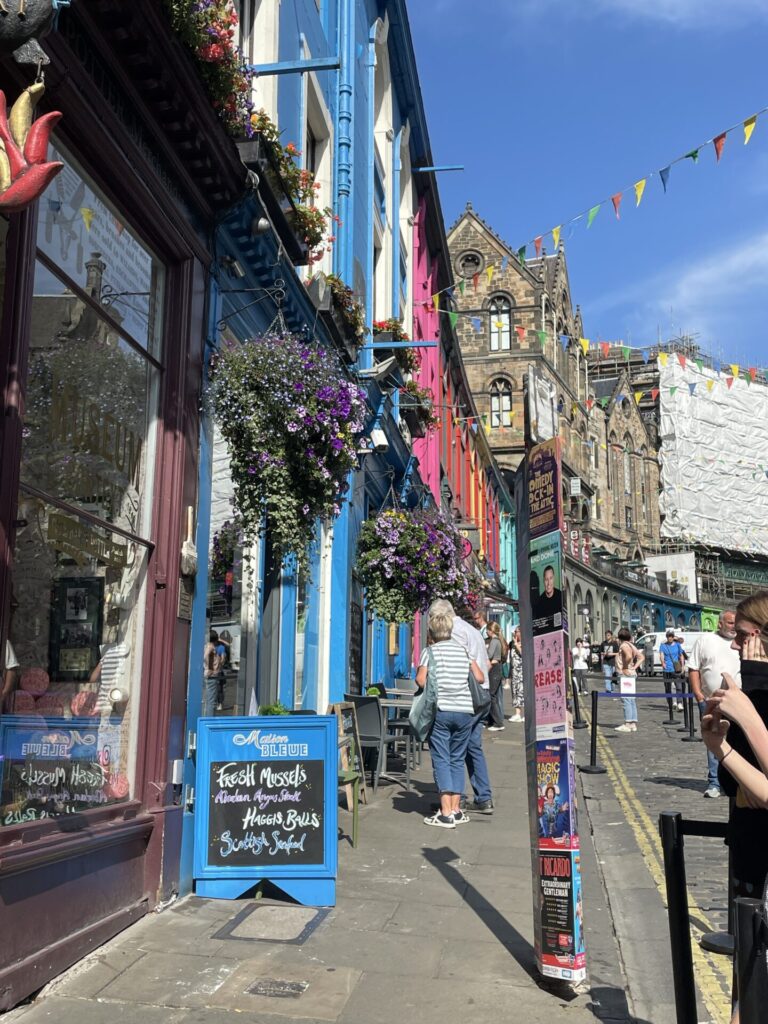
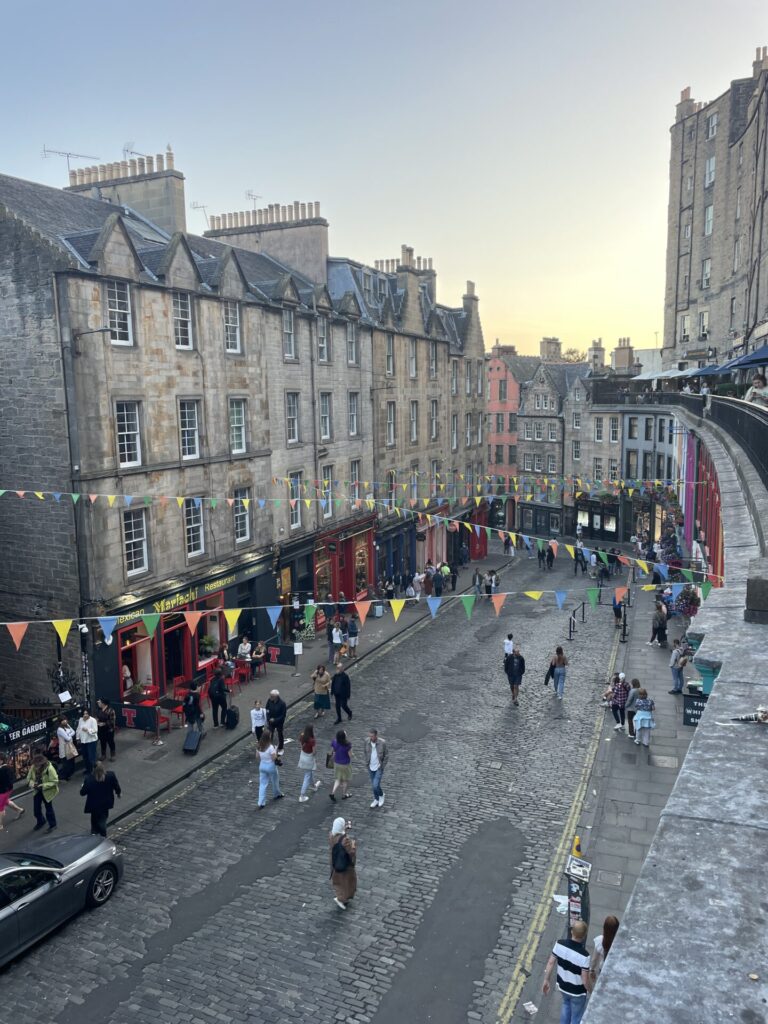
A local’s honest tip: Go early in the morning if you actually want the shot. This is one of the busiest, and best, photo spots in Edinburgh, and by mid-morning you’re photographing crowds as much as storefronts. First light, fewer people, better photo. And don’t just stay at street level; head up to the upper stone terrace to look down on the colorful chaos below.
2. The Vennel Viewpoint
Where: Just off Grassmarket.
What it’s good for: The best framed view of Edinburgh Castle, in my opinion, and the easiest of the “postcard” castle shots to reach.
The Vennel is a steep, narrow stone staircase that feels like a secret passage out of a fantasy novel. The word “vennel” comes from an old Scots term, rooted in French, for a narrow alleyway between buildings.
As you climb the steps, the historic stone walls of the Vennel viewpoint frame Edinburgh Castle so perfectly it feels close enough to touch. This is my favorite castle viewpoint in the city, and it’s genuinely easy to get to from Grassmarket.
There’s real history packed into this alley too. The Vennel steps have been a working route for locals, traders, and even cattle since the 15th century, and running alongside the path is the Flodden Wall, built in 1513 after a military defeat by the English to protect the capital from an expected invasion. This alley was also the childhood home of Bessie Watson, Scotland’s youngest suffragette bagpiper.
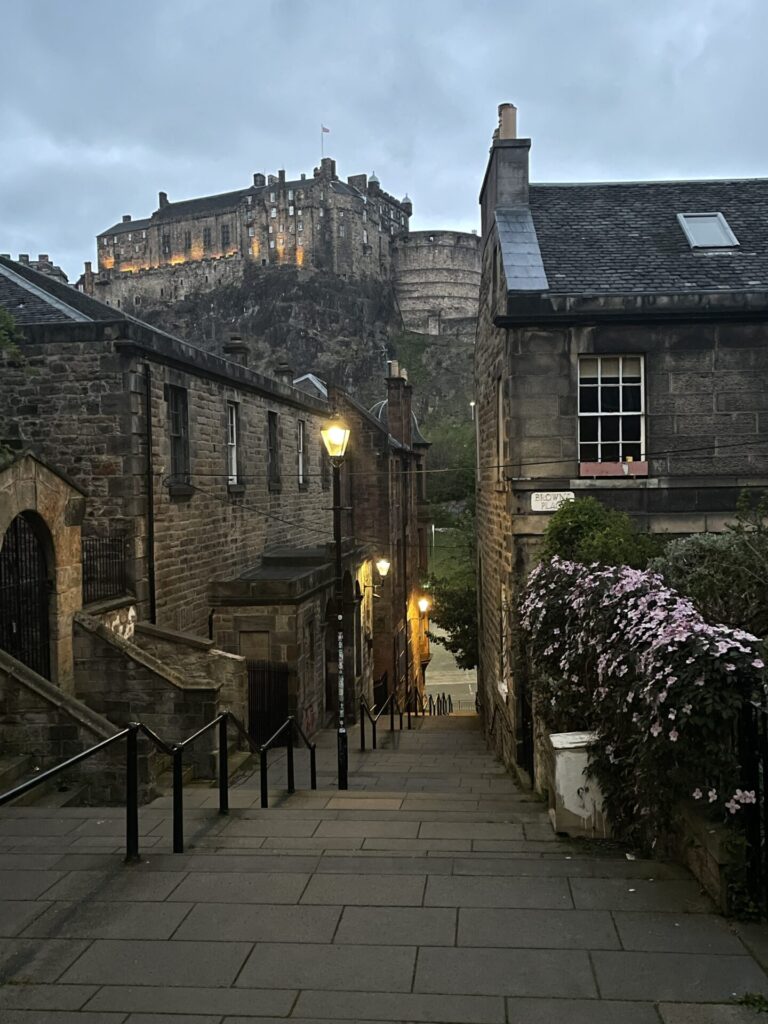
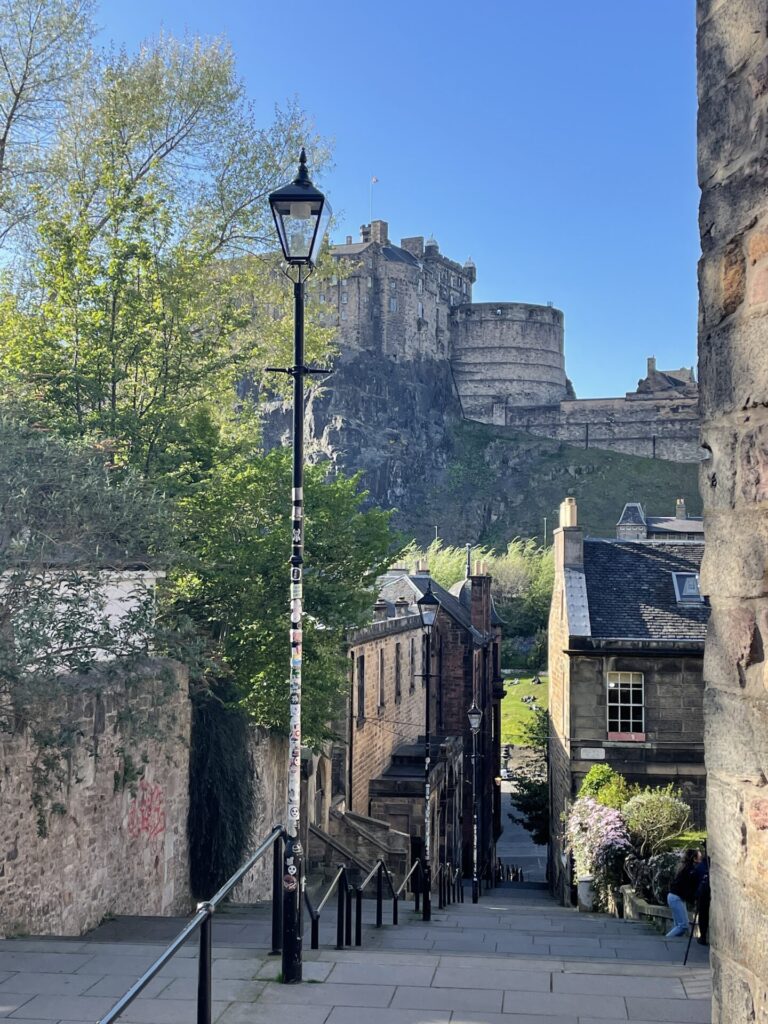
A local’s honest tip: Climb the steps and shoot looking up and back toward the castle, with the stone walls framing it on both sides. That’s the shot. Sunset makes it moodier if you can time it.
3. Greyfriars Kirkyard
Where: The heart of the Old Town.
What it’s good for: Gothic atmosphere, folklore, a loyal little dog, and a bit of Harry Potter name-hunting, all in one free graveyard.
Greyfriars Kirkyard is far more than a resting place. It’s an atmospheric time capsule where history, local folklore, and pop culture collide.
Just outside the gates sits the tiny bronze statue of Greyfriars Bobby, the loyal Skye Terrier said to have guarded his owner’s grave for 14 heartbreaking years, and it’s one of the most beloved landmarks in the city.
Inside, the kirkyard is widely believed to have inspired several character names J.K. Rowling used, including Thomas Riddell, a name you can actually find on a headstone here.
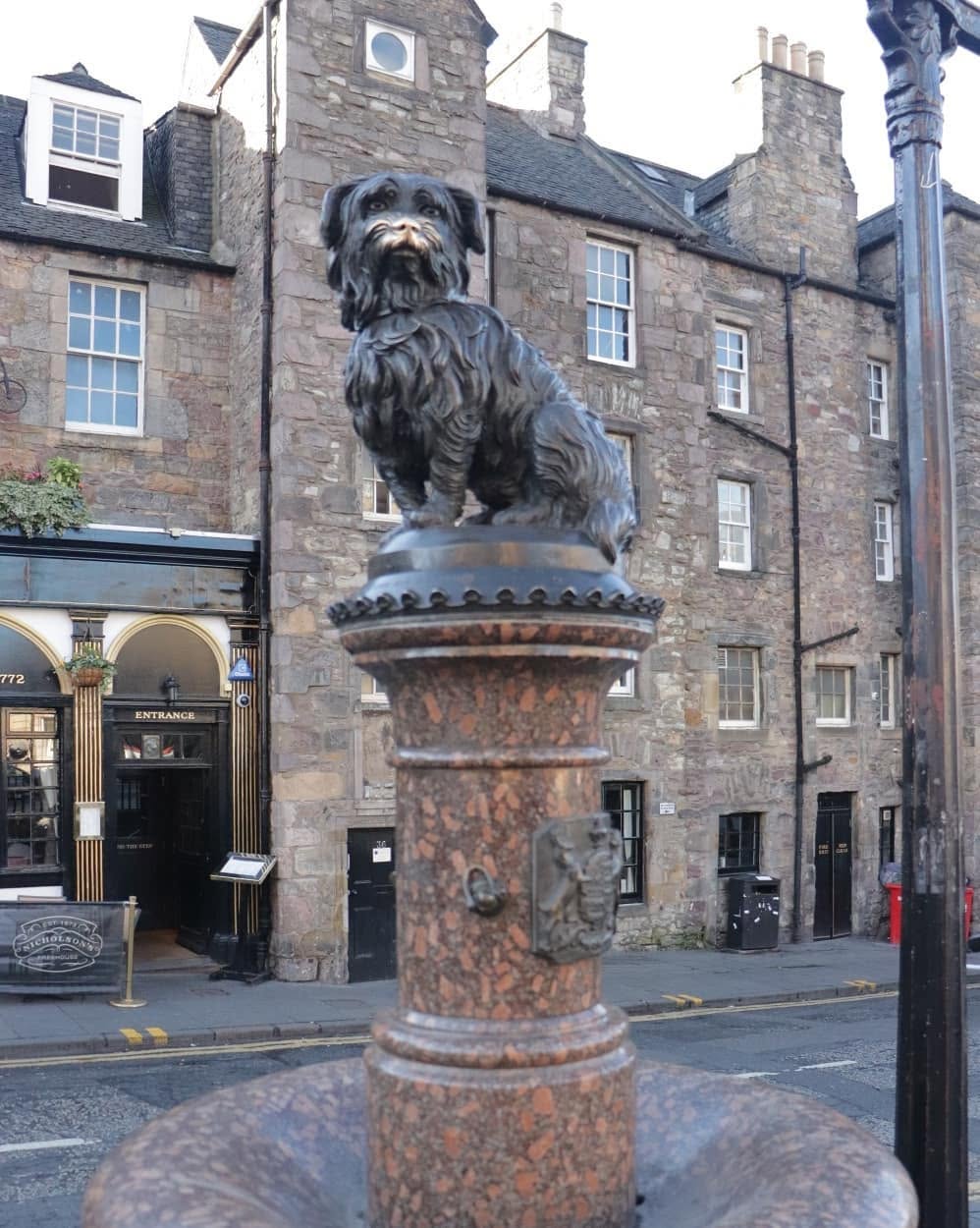
A local’s honest tip: Two things. First, please don’t rub Bobby’s nose. Tour guides started a myth that it brings good luck, but thousands of hands scratching the same spot are actually eroding the historic bronze, so give him a wave and leave his snout in peace.
Second, go for the moody, gothic version of the kirkyard rather than the sunny one. Early morning or an overcast, foggy day makes it exactly as atmospheric as you’re hoping, and it’s a completely different feeling from the busy midday visit.
4. National Museum of Scotland
Where: Old Town, on Chambers Street.
What it’s good for: A free rainy-day museum that’s genuinely one of the most interesting I’ve been to, plus a rooftop city view most people skip.
The National Museum of Scotland is free to enter and spans human history, the natural world, world cultures, science, technology, art, and design. It’s big, and I mean give-it-2-to-3-hours big to see most of it. The layout is a maze of rooms that connect into each other, so getting a little lost is part of the experience.
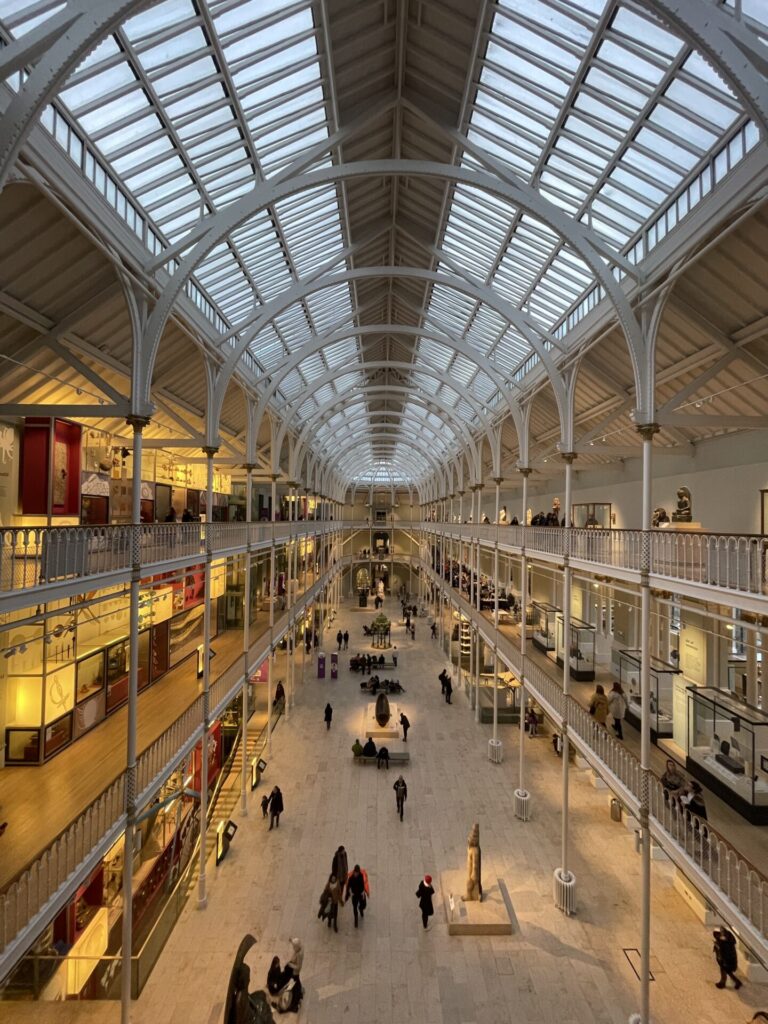
A local’s honest tip: Don’t miss the rooftop terrace. It’s an easy one to walk past, and it gives you a wide view over the city and across to Edinburgh Castle. Fair warning, it’s windy up there, so hold onto your hat and your phone.
5. The Famous Bookstores
Where: Spread across the Old Town, from Grassmarket outward.
What it’s good for: A proper indie bookshop crawl in a UNESCO City of Literature.
Edinburgh’s independent bookshop game is unmatched, so if you want to get lost in the stacks, map out a mini crawl:
- Armchair Books in the Grassmarket, famous for its floor-to-ceiling, gloriously chaotic maze of secondhand treasures.
- Lighthouse Bookshop, a queer-owned, radical indie space with a contemporary, community-focused feel that champions diverse and alternative voices.
- Topping & Company Booksellers, the stunner of the three, where books line handcrafted wooden ladders and the staff will happily brew you a fresh pot of tea while you browse.
A local’s honest tip: Save Topping’s for last and actually take the tea. Browsing with a fresh pot in hand is the whole experience, and it’s a lovely, slow way to end an afternoon of walking.
6. The Royal Mile
Where: The Old Town’s central spine, running from Edinburgh Castle down to the Palace of Holyroodhouse.
What it’s good for: The full, chaotic, bagpipes-and-buskers Edinburgh experience, all in one walk.
If Edinburgh has a beating heart, it’s the Royal Mile. It stretches from the castle gates all the way down to Holyroodhouse and runs exactly one Scots mile, and walking its cobblestones feels like wandering into a lively, year-round festival.
You’ll pass echoing bagpipers, street performers, historic pubs, and the city’s famously narrow, moody closes branching off on either side. Yes, it’s touristy. But the energy here is infectious, and it’s an essential part of any first trip.
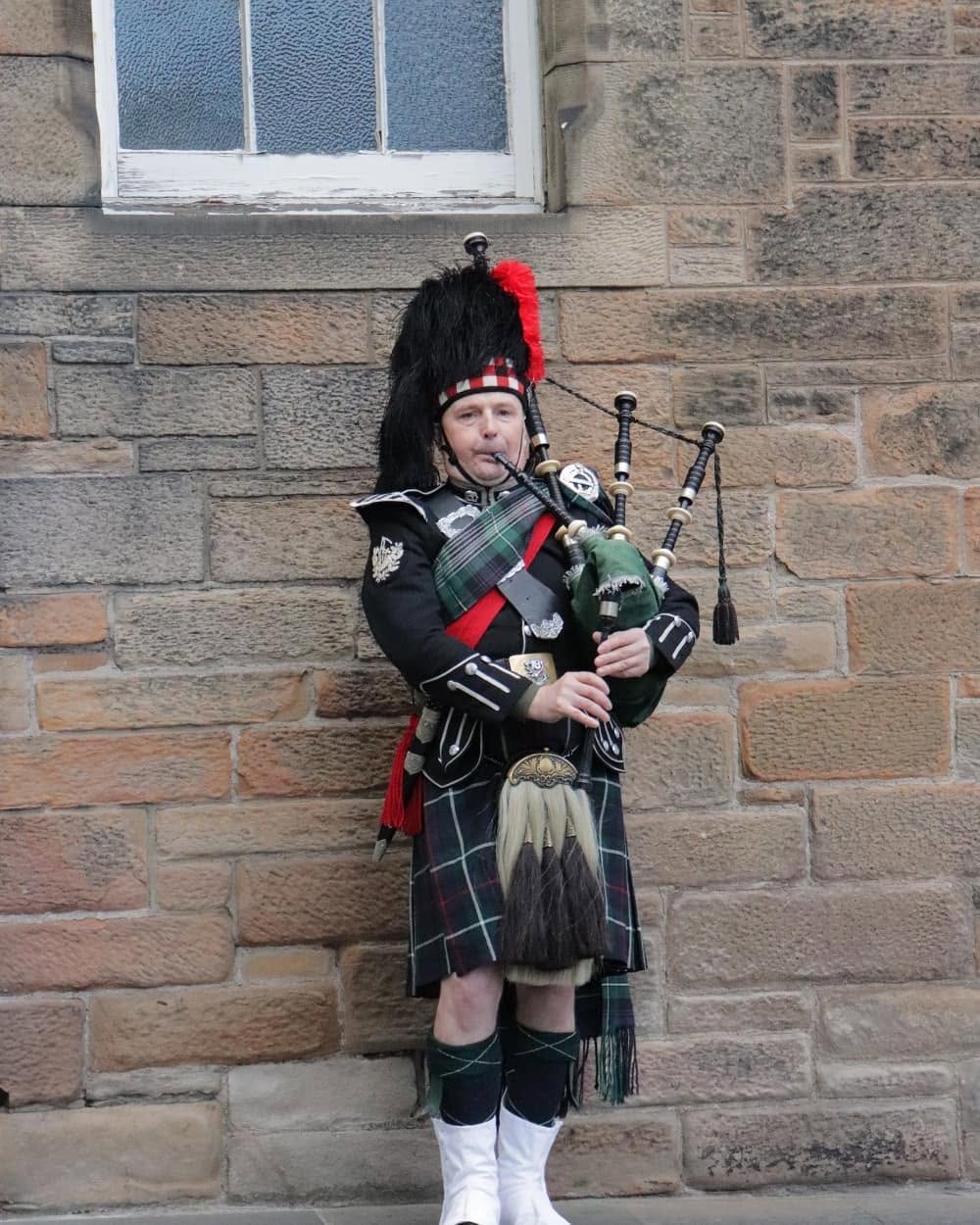
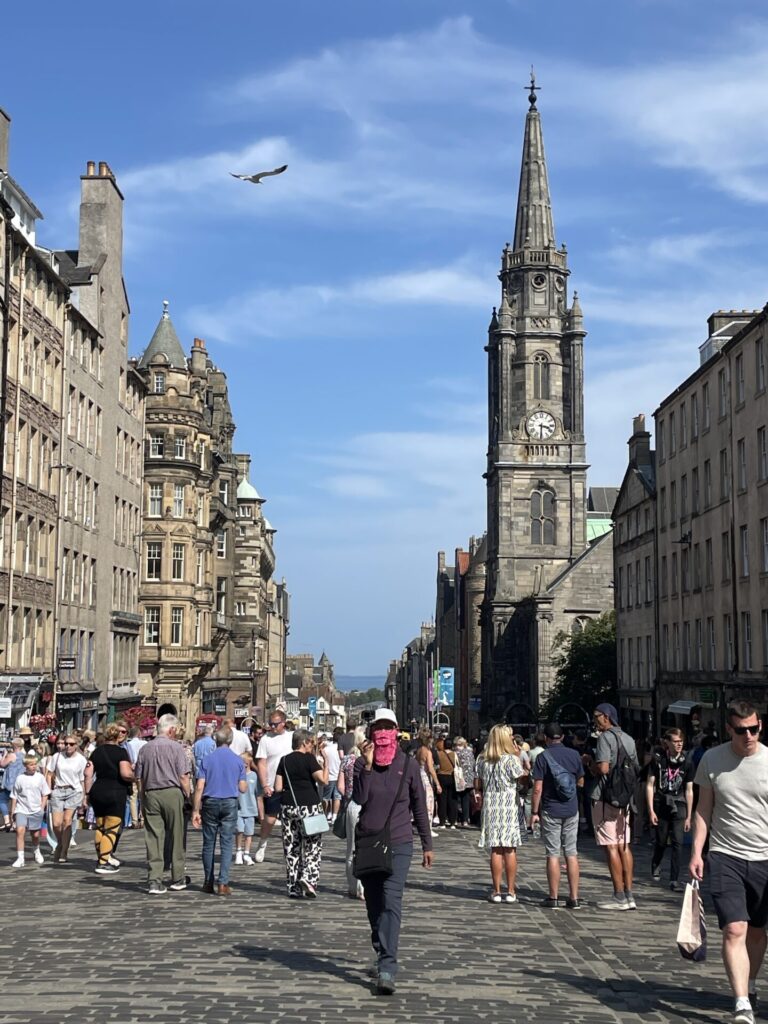
A local’s honest tip: Duck into the closes. The main drag is the show, but the narrow alleys off it are where the moody, atmospheric shots live, and most people walk right past them.
7. St Giles’ Cathedral
Where: On the Royal Mile, roughly halfway down.
What it’s good for: A free, jaw-dropping Gothic interior you can’t miss as you walk the Mile.
You literally can’t miss the dramatic crown spire of St Giles’ piercing the skyline. This magnificent building has stood since the 12th century and survived everything from religious revolutions to fire. Step inside; it’s completely free to enter, and you’re met with soaring stone ceilings and stained glass that bathes the whole interior in moody, colored light.
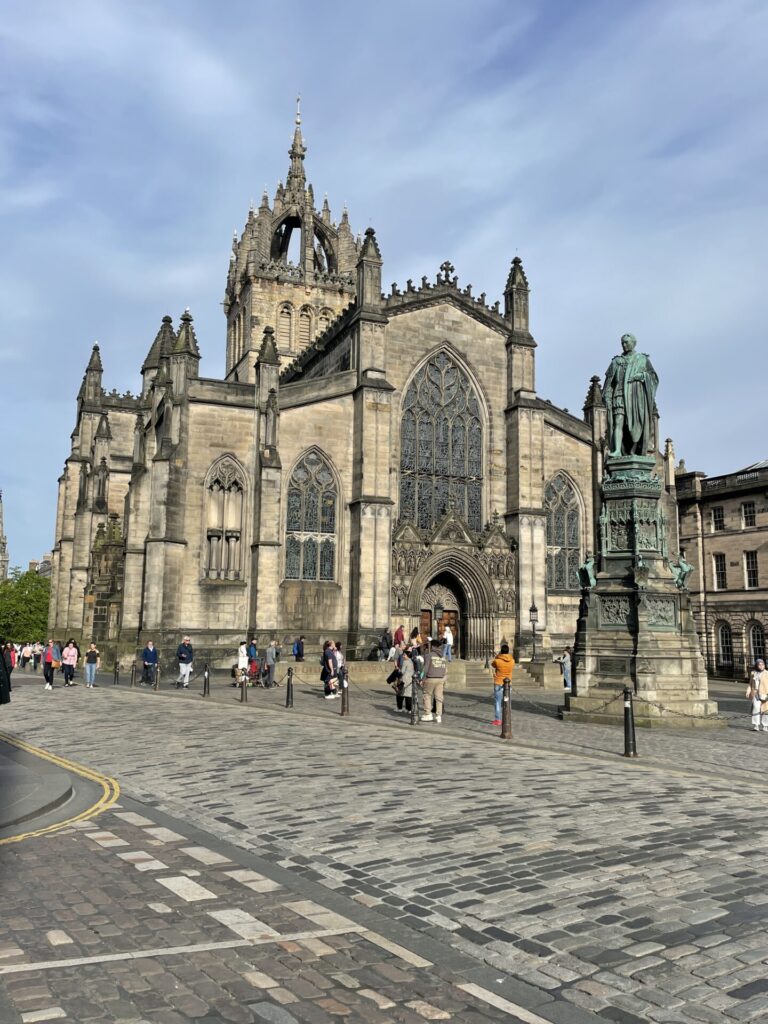
A local’s honest tip: Hunt down the Thistle Chapel inside. The intricate woodcarvings of angels playing bagpipes are the kind of detail most visitors miss, and they’re worth the extra few minutes.
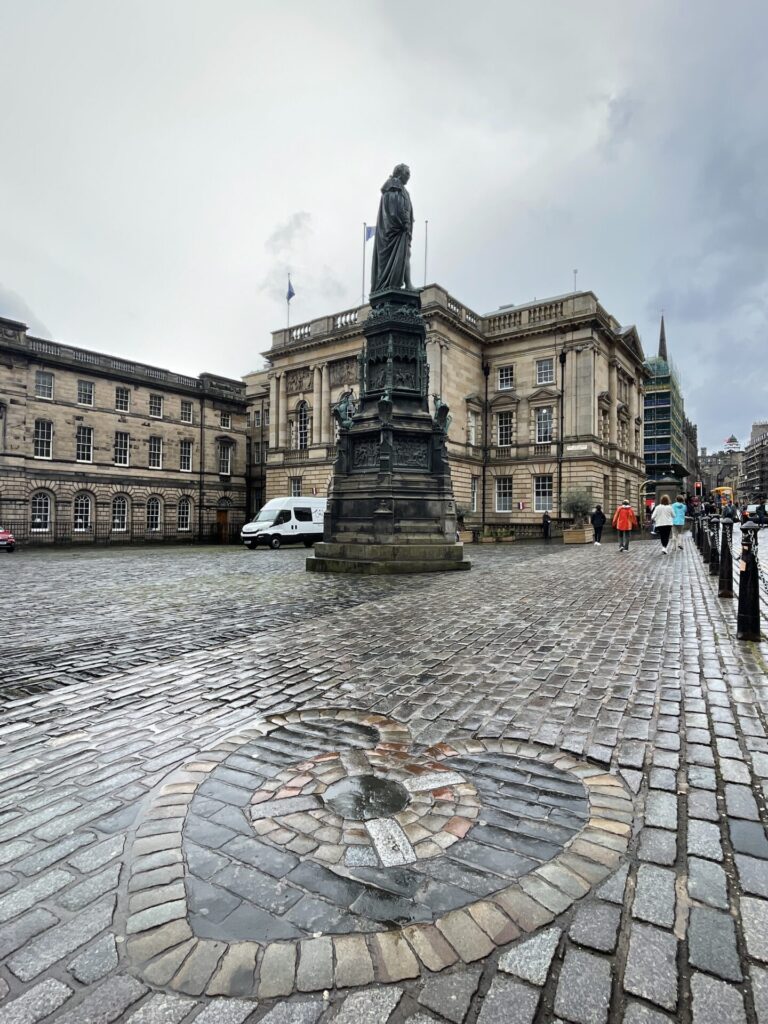
Did you know Edinburgh’s famous cobblestone mosaic, the Heart of Midlothian, is also a literary landmark? It marks the spot where the old city prison once stood, the same jail that inspired Sir Walter Scott’s novel that gave the mosaic its name. Back in the day, locals would spit on the heart. It was a way of showing contempt for the hated prison, and today, if you do it, it’s said to bring good luck. So go ahead and join in, just watch where you step.
8. The Writers’ Museum
Where: Tucked inside Lady Stair’s Close, just off the Royal Mile.
What it’s good for: A quiet literary sanctuary and one of the most peaceful hidden squares in the Old Town.
Hidden away in a gorgeous 17th-century mansion, this free museum celebrates the holy trinity of Scottish literature: Robert Burns, Sir Walter Scott, and Robert Louis Stevenson.
Even if you’re not a poetry nerd, it’s worth the detour, because the courtyard outside is paved with quotes from famous authors, which makes it one of the most photogenic little corners in the city.
A local’s honest tip: Come for the courtyard even if you skip the museum itself. It’s tucked far enough off the main drag that it stays quiet, and the paved quotes make for a lovely, low-effort photo spot.
9. Edinburgh Castle Esplanade
Where: The top of the Royal Mile, directly in front of the castle gates.
What it’s good for: Experiencing the castle up close without paying for entry, plus a big panoramic view.
You have to pay to go inside Edinburgh Castle, but you can experience a real piece of it for free. Walk all the way up the Royal Mile to the Castle Esplanade, the massive courtyard directly in front of the fortress gates.
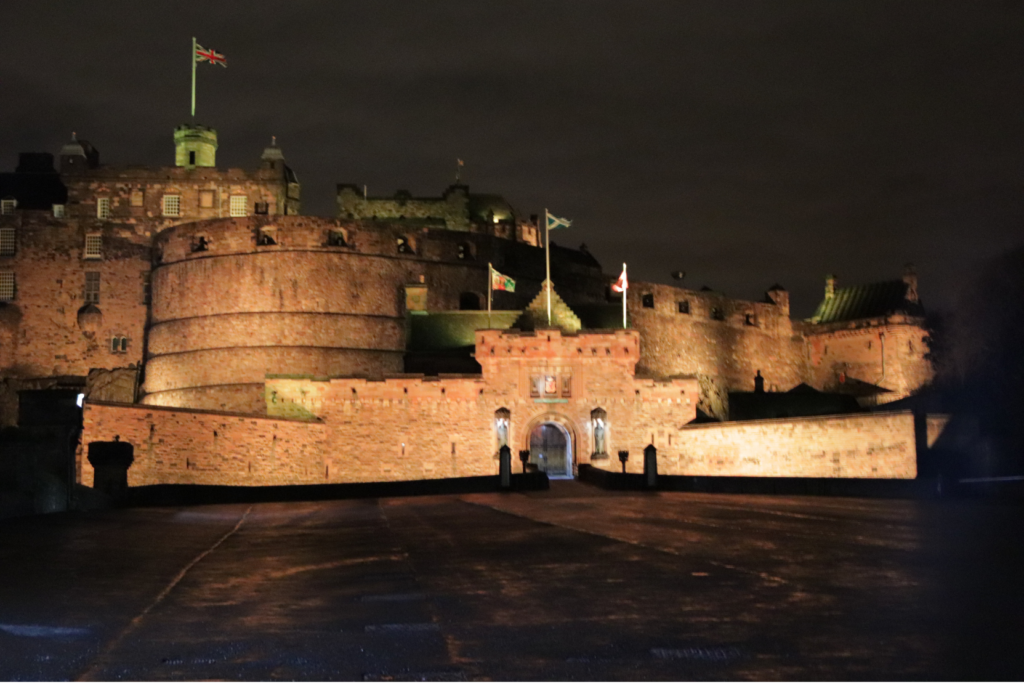
From here you can stand beneath the towering stone walls, see the historic drawbridge, and spot the statues of Robert the Bruce and William Wallace.
For context on what you’re standing in front of: the castle was home to kings and queens for centuries. One of its earliest recorded residents was St Margaret, who died there in 1093.
Her son, David I, had St Margaret’s Chapel built around 1140, and it’s both the oldest surviving part of the castle and the oldest building in Edinburgh. Today the castle also houses the Scottish National War Memorial.
A local’s honest tip: The Esplanade is also one of the best free panoramic viewpoints in the city. Turn around when you reach the top and look out toward the New Town, the Firth of Forth, and Princes Street Gardens spread out below. If you decide the free version isn’t enough and you do want to go inside, you can check opening times and prices on the official Edinburgh Castle site before you book.
Central (Between the Old and New Towns)
This cluster runs through the green valley that splits the city in two, right below the castle. It’s the stretch you’ll cross again and again moving between the Old Town and the New Town, so these four are easy to pick off in passing. I’ve ordered them roughly west to east along the valley.
10. Scottish National Gallery
Where: On the Mound, right between the Old and New Towns.
What it’s good for: Free world-class art and a perfect rainy-afternoon escape.
Entry to the main collection is entirely free, which makes this a dream for art lovers and budget travelers alike. Inside its grand neoclassical walls, you’ll find masterpieces spanning the Renaissance all the way to Post-Impressionism, including works by Da Vinci, Van Gogh, and Rembrandt. It’s the ideal place to duck inside, slow down, and soak in some culture when the weather turns.
A local’s honest tip: Its spot on the Mound puts it right in the middle of the central cluster, so it slots in easily between the gardens and the Old Town without any real detour.
11. Princes Street Gardens
Where: The valley between the Old and New Towns, running roughly from Lothian Road in the west to Leith Street in the east (about 1.2 km).
What it’s good for: A breather after the stone alleyways, plus another gorgeous free angle on the castle.
Princes Street Gardens is the city’s ultimate backyard, a sunken green sanctuary sitting directly below Edinburgh Castle. It’s the place to lounge on the grass with a coffee, listen to buskers, and look up at the castle right overhead. It’s home to the world’s oldest Floral Clock and, at its east end, the Scott Monument.
The peaceful lawns hide a fairly grim past. Before the 1820s, this valley was the Nor Loch, a polluted marshland created in the 15th century as part of the city’s defenses that became a dumping ground for sewage and a notorious site for medieval witch trials. The city drained the whole thing during the New Town expansion, and by 1876 it had opened to the public as the park you see today.
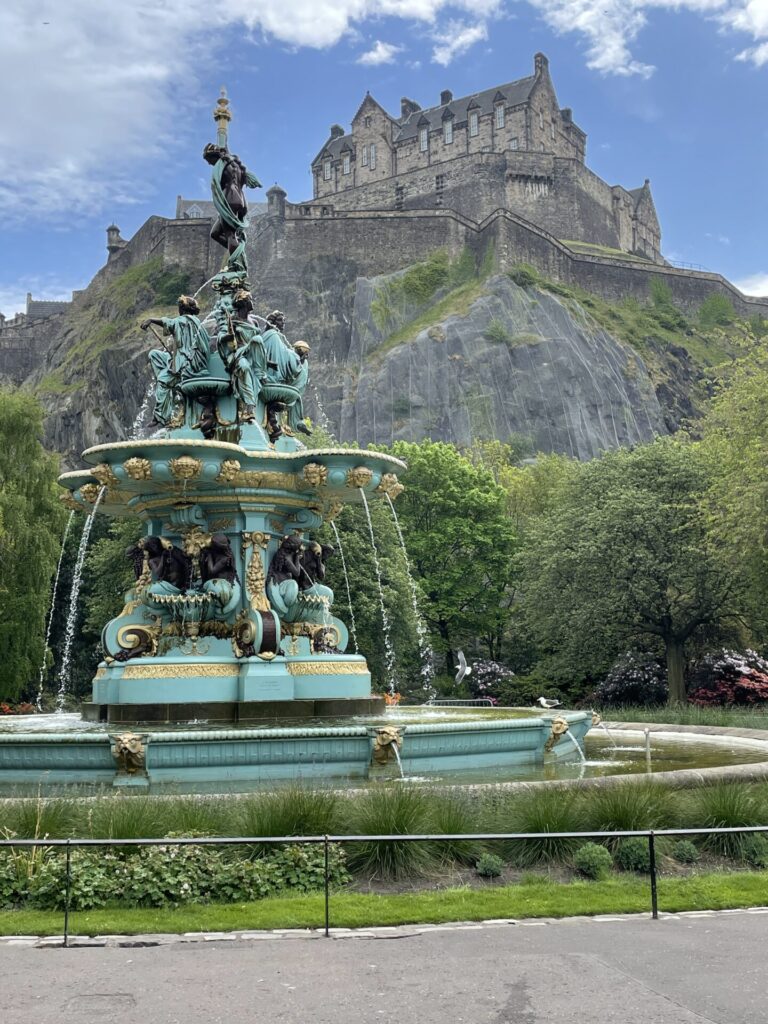
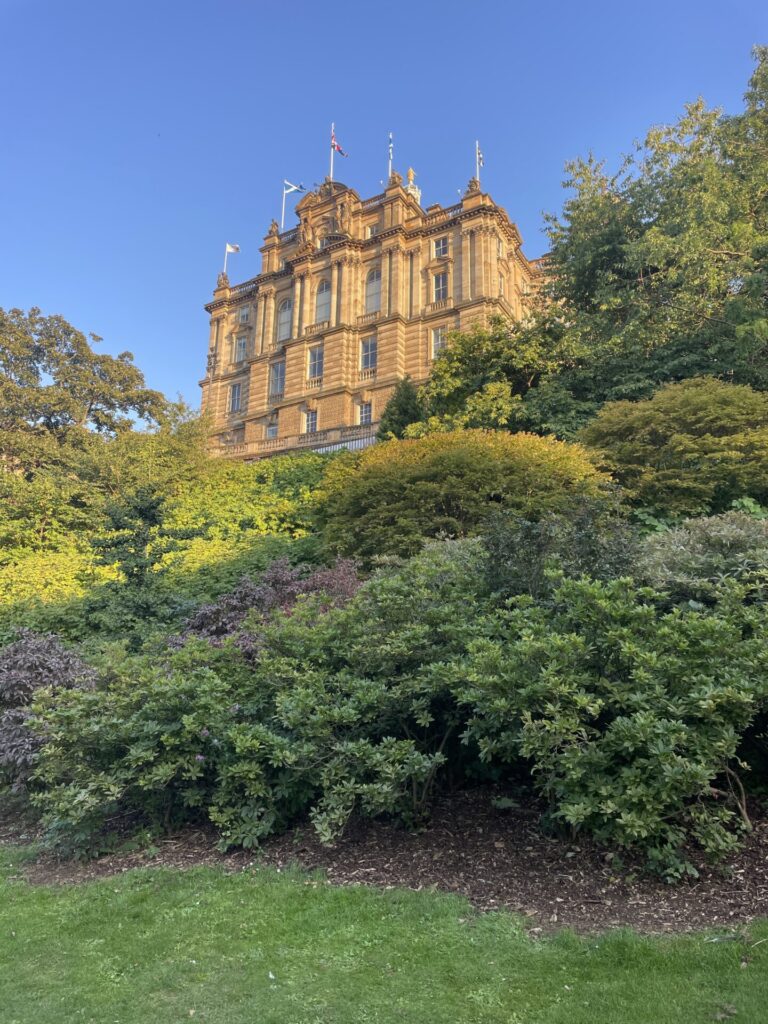
A local’s honest tip: This is where you slow down. If you’ve been powering through the Old Town’s stairs and cobbles, an hour on the grass here with the castle overhead is the reset your legs will thank you for.
12. Scott Monument
Where: East end of Princes Street Gardens, by Waverley Bridge, on Princes Street.
What it’s good for: Gothic drama and one of the most striking buildings you’ll walk past in the city center.
The Scott Monument is a Victorian Gothic tower built in honor of the Scottish writer Sir Walter Scott. It stands 200 feet (61 meters) tall, and it’s the largest monument in the world dedicated to a writer.
This is the kind of building that makes me feel like I’m walking back in time every time I visit, and it’s one of the many reasons I keep saying I’d love to live here. Edinburgh is old, historic, and remarkably well preserved. Castles and monuments everywhere you turn.
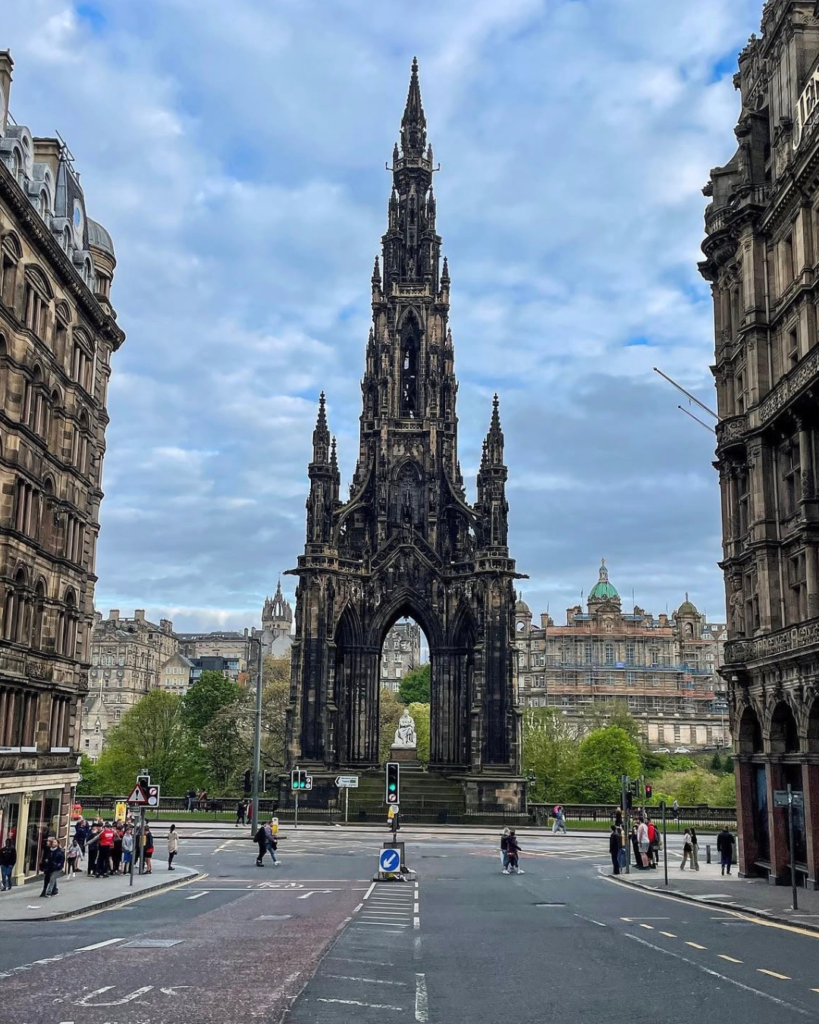
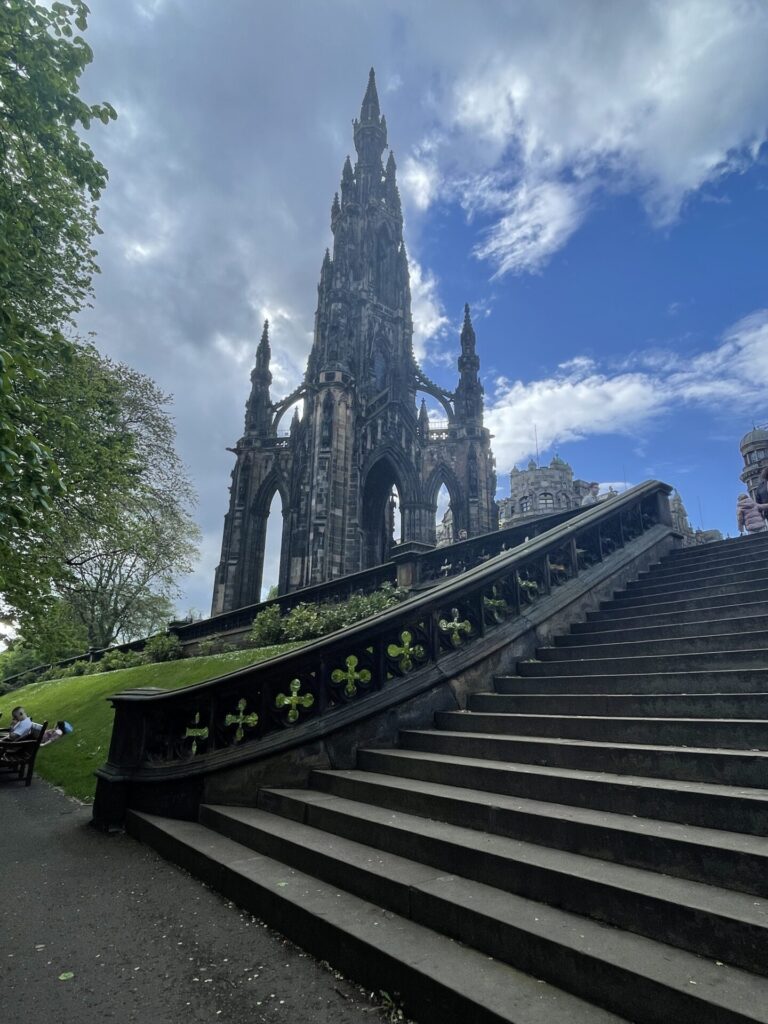
A local’s honest tip: My favorite angle is from the middle of the street, where I once nearly got flattened by the night bus. So take the tip, not the risk. Get your shot from a safe spot, and please don’t go standing in traffic for the gram.
13. Waverley Bridge
Where: The road linking the Old Town with the New Town.
What it’s good for: The classic “welcome to Edinburgh” moment, and some of the best photo opportunities in the central city.
Waverley Bridge connects the grand Georgian New Town with the moody, medieval Old Town, and crossing it gives you one of the most cinematic entry points to any city I’ve walked into. You get sweeping, unobstructed views of the jagged skyline, the Scott Monument, and the castle looming over the valley.
Here’s the detail most people miss: the bridge actually doubles as part of the roof for Edinburgh Waverley Station, so there are trains humming through the glass and iron right beneath your feet. It’s largely closed to general car traffic now, which turns it into a spacious, pedestrian-friendly plaza to stand on and plan your next move.
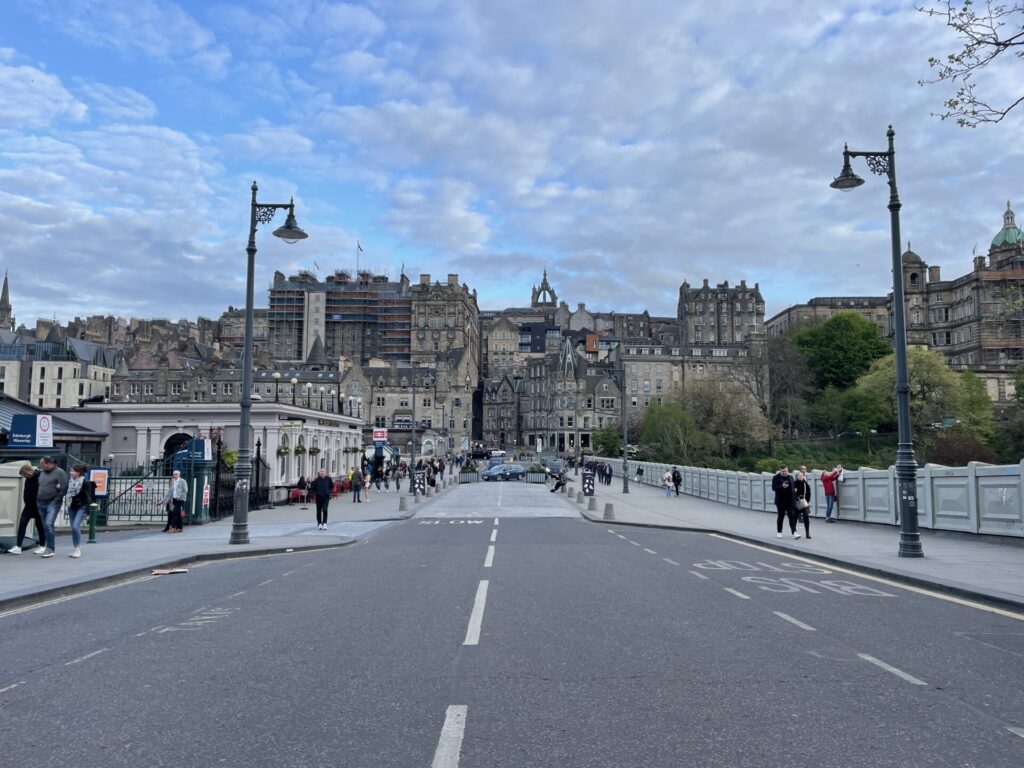
A local’s honest tip: This is my favorite stretch to shoot the transition between the two towns. Stand here for a few minutes before you rush off. The light shifts fast, and the view rewards it.
A Short Walk Out
These two sit a little apart from the central clusters, in opposite directions, so you wouldn’t do them back to back. Each is worth a small trip on its own: one for a sunset, one for a slow morning.
14. Calton Hill
Where: A quick walk from Princes Street, then an easy hike up.
What it’s good for: The best free sunset in the city, and a 360-degree view over all of Edinburgh.
Calton Hill was formed over 340 million years ago and carries history from the prehistoric era all the way to today. It started as a memorial to soldiers who died in the Napoleonic Wars, and over the centuries it collected several monuments, including the City Observatory, the Nelson Monument, and the iconic Dugald Stewart Monument. Now it’s a much-loved viewpoint over the whole city, and my honest pick for the best free sunset spot in Edinburgh.
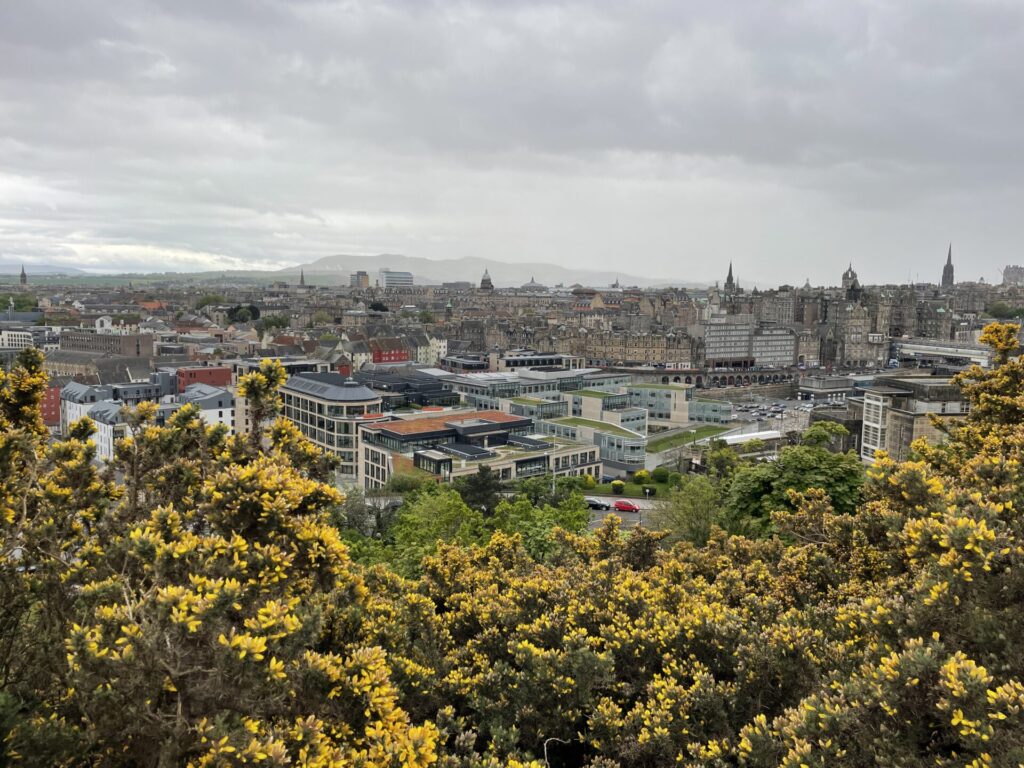
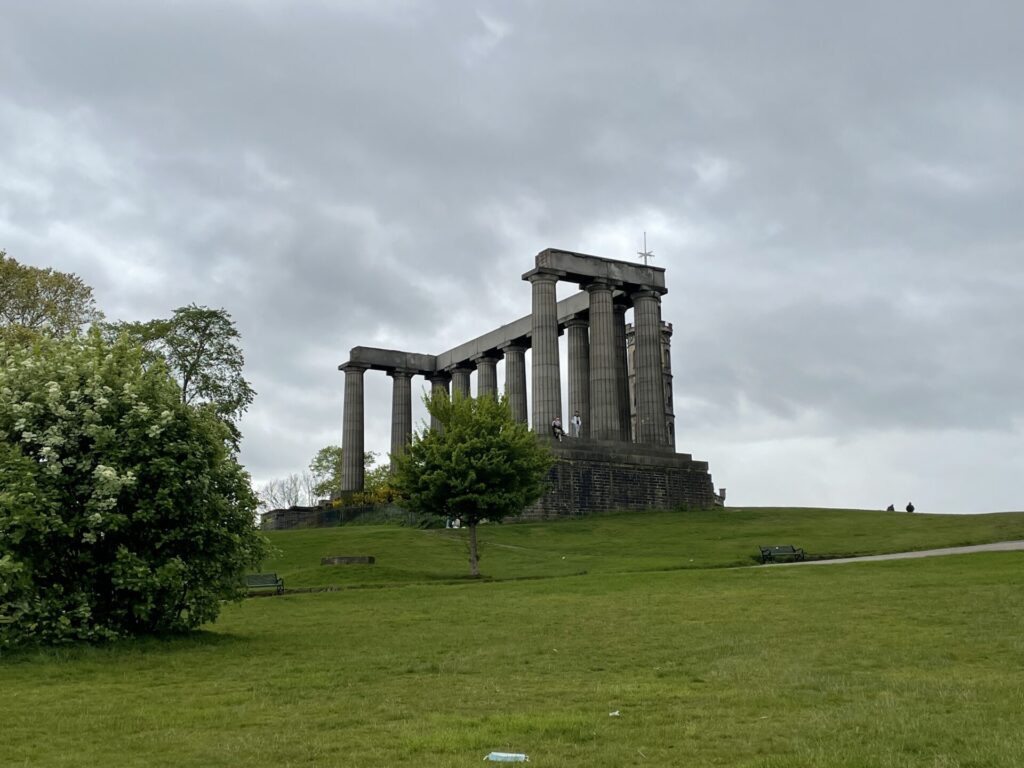
A local’s honest tip: Come for sunset, but check what time the sun actually sets. In summer you might be waiting until past 8, so bring a layer and don’t show up at 6 expecting golden hour.
15. Dean Village
Where: A short walk (about 15 minutes from the city center) or a quick bus ride.
What it’s good for: Storybook cottages, a rushing river, and the feeling of stepping into a different century entirely.
Dean Village sits in a steep, wooded valley along the Water of Leith, and it feels completely frozen in time. Instead of grand monuments, you get stone cottages, moss-covered old mills, and the sound of the river running through it.
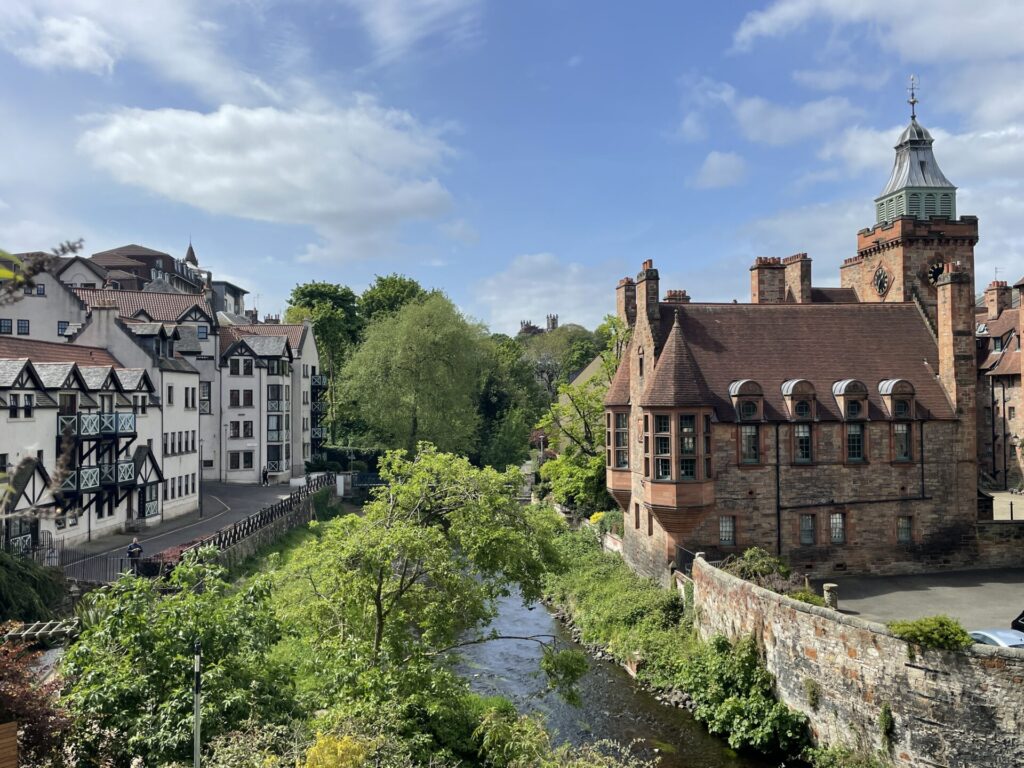
The showstopper is Well Court, a red-sandstone courtyard building with a striking clock tower. It’s one of the quietest, most peaceful pockets of the city.
A local’s honest tip: People live here. This is a residential neighborhood, not an attraction, so keep your voice down, don’t wander into private courtyards or gardens, and be respectful of the folks whose front doors you’re photographing. It stays this beautiful and this quiet because visitors treat it well.
Want to Keep Going? Here Are a Few Easy Add-ons
If the free list leaves you wanting more, a few natural next steps:
Free walking tours. Ask your hotel, hostel, or Airbnb host which free walking tours they work with. One honest note: “free” means no fixed price, not no cost. If you take one, tip the guide. It’s kind, and they’ve earned it for their time.
Just get lost. Genuinely my favorite Edinburgh advice. Some of my best shots came from streets I wandered into with no plan.
Why I Keep Coming Back to Edinburgh
Seven visits in, and I already know I’ll be back again.
There’s something about Edinburgh that feels like home to me, even though it’s a city I’ll probably never feel like I’ve fully seen. Every trip hands me something different: a new street, a view I somehow missed before, another reminder of how much history is packed into one place.
And that’s the thing I love most about Edinburgh, and about Scotland in general. The beauty isn’t locked inside one famous paid attraction. It’s everywhere, and a lot of it is free. In the Old Town alleys, up on Calton Hill at sunset, down in Dean Village by the river.
So if this is your first trip, don’t try to do all 15 in one trip, let alone one day, and don’t treat any of it as a box to tick. Pick a few, walk slowly, look up a lot, and let the city do the rest.
You don’t need a big budget to fall for this place, and if free is the whole point of your trip, there are plenty of other ways to travel more without spending money. You just need good shoes and a bit of time.
Edinburgh for First-Time Visitors: FAQs
Is Edinburgh worth visiting for first-timers?
Yes, and it’s one of the easiest cities I’d recommend to a first-time visitor. It’s compact, walkable, safe, and packed with free things to see, so you get a huge amount of the city without a big budget or a car.
Is Edinburgh expensive to visit?
It doesn’t have to be. All 15 free places to visit in Edinburgh in this post cost nothing. Your main costs are transport, food, and any paid attractions like castle entry, or a book you can’t resist at one of the bookshops.
How many days do you need in Edinburgh?
You can see the big highlights in 1-2 days, but this list isn’t built to be rushed. Spread across a longer visit, it’s more of a “wander into these when you’re in the area” collection than a tight itinerary. I’ve been at least seven times and still find new things, so more time is never wasted here.
Do I need a car in Edinburgh?
No. Edinburgh is one of the most walkable cities I’ve spent time in, and nearly everything on this list is within walking distance. When you don’t feel like walking, the buses are easy, and you can just tap a debit or credit card to pay.
Is Edinburgh safe for solo travelers?
In my experience, yes. I’ve explored Edinburgh solo across seven trips and always felt safe doing it. Normal city awareness is all you really need.
Is Edinburgh Castle free?
Going inside the castle is not free, but the Castle Esplanade in front of it is, and that’s where you get the up-close castle walls, the statues, and one of the best panoramic views in the city. The National Museum of Scotland, the Scottish National Gallery, St Giles’ Cathedral, and Greyfriars Kirkyard are all fully free too.
How do I get from Edinburgh Airport to the city center?
The simplest options are the tram or the bus, both leaving from right outside the terminal. The tram reaches the city center in about half an hour and drops you at central stops like Haymarket, Princes Street, and St Andrew Square, a short walk from Waverley Station. The Airlink 100 bus and services 17 and 18 also run into the city if you’d rather go by bus. Once you’re in the center, everything on this list is walkable from there.